US Warplane Disables Sanctioned Tanker Bound for Iran in Gulf of Oman
An F/A-18 Super Hornet struck the empty Palau-flagged vessel after its Indian crew did not comply with orders, as Washington tightens a naval blockade on Iranian ports.
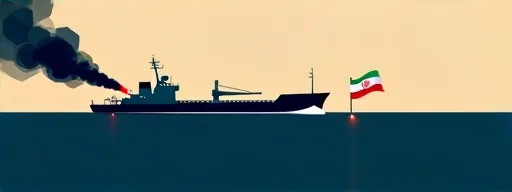
A US Navy warplane fired precision-guided munitions into an empty oil tanker in the Gulf of Oman on Monday, disabling the vessel and preventing it from reaching an Iranian port, in the most forceful enforcement yet of a naval blockade that Washington insists is designed to strangle Tehran’s illicit oil trade. The strike, launched from an F/A-18 Super Hornet flying off the USS Abraham Lincoln, targeted the engine rooms, steering gear and bridge of the M/T Marevex after its crew repeatedly ignored warning orders from American forces, the US Central Command (CENTCOM) confirmed. The tanker, registered in Palau, was not carrying cargo but was deemed to be attempting to breach the blockade imposed on all Iranian ports since 13 May.
The 24 Indian nationals aboard the disabled ship sent an urgent distress call soon after the attack. “We are burning and we need immediate assistance,” a crew member reported, according to a text of the call obtained by CNN. No casualties were officially confirmed, but the Indian seafarers’ union said the sailors required urgent evacuation, underscoring the humanitarian risks now embedded in Washington’s maritime enforcement campaign. The Marevex had been under US Treasury sanctions since December over alleged links to Iranian networks, making its interception a predictable, if dramatic, escalation.
CENTCOM’s broader data, cited by regional media, reveals that Monday’s strike was not an isolated incident. Since the blockade began, American naval forces have disabled or seized seven vessels for non-compliance, inspected and rerouted 134 ships, and allowed 42 vessels carrying humanitarian aid to pass. The tempo suggests a systematic effort to police international waters with a robustness more often associated with wartime interdiction, even as Washington stops short of a full maritime embargo under international law. Viewed from London, analysts note that the enforcement model—precision strikes on propulsion systems rather than boarding—marks a doctrinal shift, designed to minimise loss of life while achieving operational paralysis.
Tehran has yet to issue a formal response, but the optics of a US warplane attacking a civilian-crewed merchant vessel in international waters are certain to inflame tensions. Iranian state-linked outlets condemned the move as an act of “piracy,” framing it within the longer history of American unilateral sanctions. Meanwhile, the Indian government faces a delicate consular task, as its nationals become collateral players in a geostrategic tussle. For Washington, the incident demonstrates resolve: the administration is prepared to use calibrated force to enforce sanctions whose legal basis remains contested beyond its allies. The challenge now is whether this new posture invites retaliatory Iranian asymmetric actions—or simply pushes the illicit shipping trade into darker corners of the maritime domain.
How the same story is told elsewhere.
U.S. forces enforced sanctions against Iran by disabling an empty tanker that was trying to break the blockade. The Palau-flagged vessel with an Indian crew was heading to an Iranian port when an American warplane struck its propulsion and guidance systems with precision munitions, stopping it without causing casualties.
Washington claims it disabled an oil tanker linked to Iran after the crew allegedly ignored orders. Outlets aligned with Tehran report that American jets targeted the engines of a civilian vessel, accusing the U.S. of enforcing illegal maritime restrictions against the Islamic Republic. The incident fits into a pattern of aggressive acts against ships in the region.
The U.S. military intercepted an oil tanker bound for Iran and opened fire, damaging its propulsion and guidance systems after the crew refused to obey orders. Outlets in the Levant and Maghreb present the action as another instance of Washington unilaterally imposing its blockade on Iranian ports, raising questions about the legality of such interventions in international waters.
This story appeared in
5 sources · 2 languages · 24h window