Indictment, Warships and Blackouts Push Cuba Closer to the Abyss
The US indictment of Raúl Castro, Rubio’s ‘failed state’ label, and Havana’s urgent UN appeal for protection lay bare an island in freefall, with desperation eroding revolutionary loyalty.
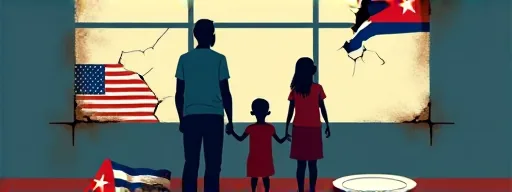
The most dramatic escalation came not from a naval deployment but from a courtroom. Last week’s US indictment of former President Raúl Castro, a move unprecedented in its direct targeting of Cuba’s revolutionary old guard, shattered any lingering pretence of diplomatic restraint. Coming just months after Donald Trump mused publicly about taking the island, and as warships positioned themselves within sight of the Malecón, the legal action was read in Havana as the prelude to something more than rhetorical bluster. Days later, Secretary of State Marco Rubio distilled the new Washington consensus, branding Cuba a “failed state” ruled by “a bunch of incompetent communists” and warning that a collapsed country 145 kilometres off the Florida coast represented a direct national security threat.
Viewed from Havana, the response has been a febrile mix of defiance and desperation. Foreign Minister Bruno Rodríguez used a UN Security Council session to accuse Washington of conducting an “energy siege” tantamount to a naval blockade and thus an act of war, warning of a “bloodbath” unless the international community intervened. Behind the juridical language, a rare interview given by Cuba’s deputy foreign minister revealed a regime preparing for the worst, insisting its population was ready to repel any military assault while simultaneously denouncing tightened oil sanctions as a deliberate humanitarian stranglehold. In European capitals, diplomats see two powers locked in a choreography of brinkmanship that leaves little room for the back-channel pragmatism of earlier eras.
On the ground, however, the official talk of resistance rubs against a profound fatigue. The historian Alejandro de la Fuente, charting an island enduring 20-hour daily blackouts and an exodus of more than a million people since 2021, told Argentine media that a psychological threshold had been crossed: “Cubans now think any alternative, even the North American one, is better than continuing like this.” That sentiment is finding increasingly explicit expression. From inside the island, voices reported by Spanish press describe US intervention as “the only solution,” an utterance that would once have been unthinkable in public. The capture of Nicolás Maduro in January, and the subsequent fracturing of Caracas’ patronage, has severed a vital economic lifeline while feeding an atmosphere of terminal uncertainty.
Historical memory sharpens the present tension. Before New Year’s Eve 1958, Cuba was the Caribbean’s glittering playground for American tourists, a tropical stage of cabarets and casinos whose collapse into revolutionary austerity defined a generation. The indictment of Raúl Castro now binds that lost world to the current collapse, suggesting Washington is willing to dismantle the old guard symbol by symbol. Analysts in London note that the fusion of indictments, naval posturing and sanctions forms an uncommonly synchronised pressure campaign, but its outcome is dangerously unpredictable. The risk is not simply a failed state on America’s doorstep, but a spiral in which a regime cornered by its own myth of resistance and a superpower tempted by coercive spectacle together manufacture the very catastrophe both profess to fear.
How the same story is told elsewhere.
Havana warns that if Washington forsakes dialogue for war, a bloodbath could ensue. Cuban officials reject U.S. national security threat claims, accusing the Trump administration of tightening sanctions, moving warships, and manufacturing a humanitarian crisis while appealing for UN help.
As U.S. pressure mounts, China and Cuba deepen agricultural cooperation. Beijing offers diplomatic backing and rice shipments, framing the bilateral ties as a long-term strategic partnership that sidesteps alarmist narratives.
This story appeared in
8 sources · 1 languages · 24h window