Bolivia Strips Emergency Curbs as Protests Grip the Country
President Rodrigo Paz gains legal authority to deploy the military to clear roadblocks and restore order after four weeks of unrest, shortages, and one confirmed death.
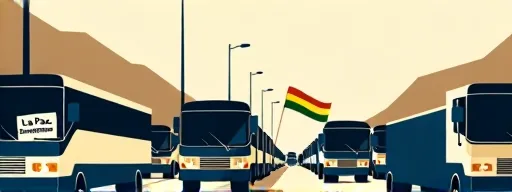
Bolivia’s Congress voted overwhelmingly this week to repeal the 2020 law that had constrained the president’s ability to declare a state of exception, handing Rodrigo Paz sweeping powers to use the armed forces against the increasingly chaotic roadblocks that have paralysed much of the country. Within hours of the measure’s promulgation, Paz formally declared a state of emergency and ordered the military to begin clearing the barricades that have cut off La Paz and El Alto from fuel, food and medical supplies. The move, which comes after more than a month of protests, marks a dramatic shift from the government’s earlier, more conciliatory posture and represents one of the most assertive deployments of the security apparatus since the tumultuous 2019 crisis that toppled Evo Morales.
The unrest began modestly, with transport workers demanding compensation for damage caused by substandard fuel, but quickly metastasized into a broader rejection of Paz’s economic liberalisation agenda. A proposed land reform that smallholders feared would enable large-scale corporate buy-ups ignited a coalition of miners, campesinos and neighbourhood groups, many with ties to the former president, who now stands accused by the government of orchestrating the upheaval. Paz has acknowledged his failure to unite the country since taking office last November, telling local media that protesters he met said they “want to be part of the solutions.” Yet the blockades have steadily tightened, with reports of dynamite thrown in the streets and a death during a military operation over the weekend – a fatality the government initially denied.
Viewed from Brasília or Buenos Aires, the Bolivian turmoil fits a wider regional pattern. Across South America, conservative leaders elected on promises of fiscal discipline and security crackdowns are confronting what analysts call the “patience cliff” – a precipitous drop in popular support once the inevitable austerity measures bite. Rodrigo Paz’s approval ratings have fallen sharply, mirroring the trajectory of counterparts elsewhere who swept to power without resort to traditional populist handouts. European diplomats and human rights organisations have urged restraint, warning that the removal of the emergency law’s restrictions could lead to abuses and a deeper militarisation of politics. The Catholic Church and rights groups have called for an urgent, mediated dialogue to avoid an escalatory spiral.
The immediate dilemma is whether the armed forces can clear the roads without provoking wider violence. Paz has hinted that he will combine “hard hand” tactics with renewed talks, but his room for manoeuvre is narrowing. The newly repealed law was enacted in 2020 precisely to prevent the military from being used for internal repression after the deadly crackdowns of the Morales-interregnum period. Its abolition, while granting the state a short-term tool to restore supply lines, risks alienating the very social sectors whose grievances extend beyond any single subsidy cut. For an Andean nation that has seen three presidents fall to street protests in the past two decades, the choice between repression and concession is seldom straightforward – and the consequences of getting it wrong are rarely contained within its borders.
How the same story is told elsewhere.
Latin American outlets cast doubt on the repeal of the exceptional-states law, framing it as a unilateral gain for President Rodrigo Paz in his crackdown on social movements. They underscore the dangers of abuses and militarisation while portraying road blockades and shortages as symptoms of deep popular discontent driven by inequitable economic measures.
Continental European press portrays a Bolivia sinking into growing chaos, where the president is granted full powers to declare a state of exception yet appears hesitant and unable to heal the nation. The narrative oscillates between dialogue and the threat of military intervention, with the government itself conceding its failure to unify the country as protests intensify.
This story appeared in
11 sources · 4 languages · 24h window