US sets Hormuz opening and nuclear curbs as twin conditions for Iran deal
Marco Rubio tells Congress that any sanctions relief is contingent on Tehran abandoning its nuclear programme, while free passage through the Strait of Hormuz remains the primary precondition for progress.
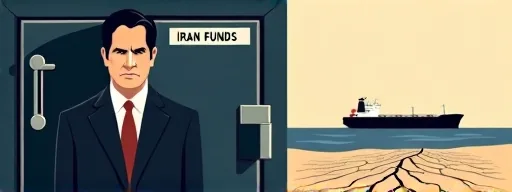
US Secretary of State Marco Rubio has laid out a rigid two-track framework for ending the three-month war with Iran, telling Congress on Tuesday that the reopening of the Strait of Hormuz is the primary precondition for any progress, but insisting that sanctions relief will be granted only if Tehran abandons its nuclear programme. In his first public testimony since the conflict began on 28 February, Rubio held out the possibility of an interim deal — “it could happen today, it could happen tomorrow, it could happen next week” — while acknowledging that a comprehensive agreement acceptable to the Senate and the American public remains elusive.
Washington’s immediate demand, Rubio said in appearances before the Senate Foreign Relations Committee and the House Foreign Affairs Committee, is that Iran declare the Strait of Hormuz open and permit commercial vessels to transit international waters without facing attack or being forced to pay fees. “If Iran wants to return to transporting its oil, it must reopen the strait,” he warned, adding that the US would sustain its naval blockade of Iranian ports if Tehran persisted in closing the strategic chokepoint. The top diplomat claimed that the American-led military campaign had achieved a “brilliant success” in degrading Iran’s conventional arsenal, substantially reducing its ability to manufacture missiles and drones, though he cautioned that the Islamic Republic still retains a large number of low-cost unmanned aircraft that pose a difficult threat.
Moving to the nuclear file, Rubio stressed that no sanctions relief had been offered in exchange for reopening the strait alone. “Any sanctions reduction is conditional,” he stated. “It must be in return for addressing the very reasons those sanctions were imposed in the first place — their nuclear programme.” Iran’s high-level enrichment activities, he noted, are the primary trigger for the punitive measures, and any easing would require verifiable steps to curtail those activities. He characterised Tehran’s uranium stockpile and enrichment levels as “highly technical matters” that could take months to resolve, pointing to the complexity of negotiations that have yet to produce a breakthrough.
Viewed from regional capitals, the conditions reflect an American attempt to compartmentalise the immediate crisis in Gulf shipping lanes from the longer-term challenge of Iran’s nuclear ambitions. The closure of Hormuz has sent tremors through global energy markets, driving up insurance and shipping costs as the three-month war drags on. Meanwhile, fresh reports indicate that Washington has pressured Oman to sever diplomatic ties with Iran, using a mix of threats including sanctions and possible military action — a sign that the administration is widening its coercive tools beyond the battlefield. As diplomacy lurches forward, analysts in London note that even if an interim accord is reached, securing broader Congressional buy-in for a lasting settlement will require delivering concrete and irreversible concessions from Tehran — a prospect that, for now, depends on whether the costs of isolation outweigh the regime’s entrenched resistance.
How the same story is told elsewhere.
The United States imposes maximalist conditions on Iran, refusing to ease sanctions while threatening regional intermediaries. The demand to reopen the Strait of Hormuz as a prerequisite for any talks, combined with insistence on nuclear concessions, is part of an illegal siege warfare. American pressure on Oman reveals coercive diplomacy with no genuine intent to negotiate.
Washington sets clear conditions to end the American siege: Tehran must fully reopen the Strait of Hormuz without charging fees and agree to nuclear negotiations. The US military operation is seen as a success that degraded Iran's capabilities, and the goal is restoring freedom of navigation and global trade security. Any sanctions relief will remain contingent on substantial nuclear concessions, not just the strait's reopening.
Secretary Rubio expresses cautious optimism that a deal to end the war could materialise within weeks, provided Iran accepts severe nuclear restrictions. The military campaign has degraded Iran's conventional forces, but the path remains uncertain because of technical nuclear details that could take months to resolve. The administration insists that any sanctions relief hinges on Tehran abandoning its enrichment programme, not just on reopening the Strait of Hormuz.
This story appeared in
10 sources · 3 languages · 24h window