U.S. Vows to Respect Tariff Caps Despite New Forced-Labour Levies
Trade representative Jamieson Greer reassures allies with existing deals that Washington will not breach agreed limits, even as it proposes penalties on 60 economies over labour practices.
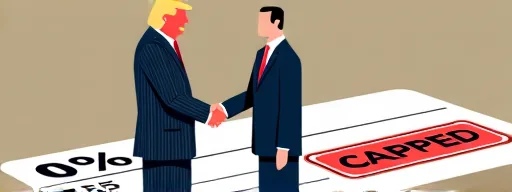
Jamieson Greer, the United States trade representative, sought to calm diplomatic nerves on Thursday by pledging that Washington would honour its negotiated tariff caps with key allies, even as his office pursues a sweeping new punitive regime against 60 economies over forced-labour standards. “We understand that a deal is a deal,” Greer told reporters on the sidelines of an OECD ministerial meeting in Paris, explicitly invoking the so-called Turnberry agreement clinched with the European Union last year. The comment, which officials in Tokyo and Brussels immediately seized upon, signalled that the EU and Japan—both named in the fresh Section 301 investigation—will not see their bilateral tariff ceilings breached.
The reassurance came just two days after the Office of the United States Trade Representative proposed additional duties ranging from 10 to 12.5 per cent on a sprawling list of nations, accusing them of failing to adequately prohibit and police imports produced with forced labour. The legal basis, Section 301 of the Trade Act of 1974, allows Washington to penalise trading practices it deems unreasonable or burdensome to U.S. commerce. Brussels swiftly protested its inclusion, arguing that it enforces strict bans on such goods and calling on Washington to fully respect the Turnberry accord, which caps U.S. levies on most European imports at 15 per cent.
Viewed from Tokyo, where a parallel bilateral agreement likewise limits U.S. tariffs to 15 per cent, Greer’s remarks raised the prospect of a tailored reduction in the new forced-labour rate to stay within the agreed ceiling. That reading was reinforced by Japanese diplomatic sources who note that the USTR explicitly referenced Japan alongside the EU when discussing the sanctity of negotiated deals. The concession underscores a broader pattern: economies that invested in earlier tariff-cap agreements—often secured through intense, high-stakes summits—now enjoy a buffer against Washington’s punitive trade levers.
By contrast, nations without such agreements face the full brunt of the proposed duties. Nigeria, for example, was listed among the 60 offending economies and could see American tariffs on its exports rise by 12.5 percentage points, on top of existing rates, a prospect that has rattled producers in Abuja. The Nigerian case illustrates how the forced-labour investigation doubles as a pressure tool, particularly on emerging markets that lack the diplomatic bandwidth to negotiate bespoke caps. While the USTR’s announcement is subject to public consultation, the baseline message is clear: the new tariffs are the default, and derogations require pre-existing legal commitments.
Analysts in London and Geneva see the episode as crystallising an emergent two-tier trade architecture. The United States, under both Democratic and Republican administrations, has increasingly used national security and labour rights statutes to wrest bilateral concessions, rewarding partners that agree to self-binding deals while penalising those that remain outside. Greer’s Paris remarks, while conciliatory in tone, reinforce that logic. The coming months will test whether more countries rush to negotiate such accords—and whether the EU and Japan can leverage their capped status to influence the broader investigation’s outcome.
How the same story is told elsewhere.
A detached report notes that the U.S. trade representative said 'a deal is a deal,' reassuring partners with negotiated tariff caps like the EU. The proposal for new duties on 60 economies over forced labour is treated as a technical matter, without alarm over any spillover in South Asia.
A calm dispatch reports that Washington will respect the tariff ceilings agreed with the EU and Japan, and even hints at a possible reduction for Tokyo. The planned Section 301 duties are presented as compatible with existing bilateral deals, offering a pragmatic, reassuring outlook for European markets.
An alarmed report highlights that Nigeria is among the 60 economies accused of lax forced-labour enforcement, facing tariffs of up to 27.5 percent. It frames the U.S. move as a unilateral penalty that severely hits Nigerian exports, lacking the protections enjoyed by other partners, and stirs indignation over Washington's trade pressure.
This story appeared in
5 sources · 3 languages · 24h window