Trump Says Iran Renounced Nuclear Arms Amid Tougher US Demands
President claims guarantees against development or purchase, but Tehran has yet to confirm, and a revised American framework may complicate peace talks.
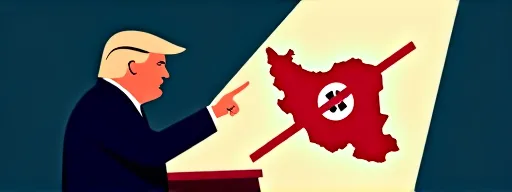
Donald Trump used a Fox News interview to declare that Iran had accepted a comprehensive prohibition on nuclear weapons, extending beyond development to include acquisition. The statement, aired on Saturday, came as The New York Times and Axios reported that the US president had returned a new, more stringent negotiating framework to Tehran, leaving diplomats to parse whether this represented a breakthrough or a hardening of positions that could prolong a devastating Middle East conflict.
The war, sparked by intensive American and Israeli strikes against Iranian targets on 28 February, has shuttered the Strait of Hormuz, through which roughly one-fifth of the world's oil supply once transited. Reopening the waterway is, alongside nuclear guarantees, a core US priority. Viewed from Washington, the revised proposal aims to accelerate a process that, according to one official cited in the Italian press, has frustrated Trump by its pace. The president himself struck a patient tone, claiming progress ‘slowly but surely,’ yet the dispatch of tougher terms suggests an impatience with Iran’s perceived stalling.
Tehran has publicly questioned Trump’s characterisation, with Iranian officials casting doubt on any final agreement. In European capitals, the mood is one of cautious appraisal. Analysts in London point to the precedent of the 2015 nuclear accord, which Trump unilaterally abandoned, as a cautionary tale for any new understanding that lacks broad international endorsement. The Italian daily Il Giornale added a layer of intrigue by reporting that the framework was sent directly to ‘Supreme Leader Mojtaba Khamenei’—an apparent conflation of names that nonetheless underscores the highly personalised nature of the diplomacy.
The strategic implications ripple outward. For energy markets, the sustained closure of Hormuz is a slow haemorrhage, with knock-on effects already visible in global inflation indices. For the Middle East, a region still digesting the shock of direct US-Israeli military action on Iranian soil, a credible off-ramp is desperately needed. Yet the intersection of Trump’s electoral posturing—the Fox interview was conducted with his daughter-in-law—and the opaque power structures in Iran leaves scant room for easy compromise. The insistence on a complete nuclear prohibition, including an unprecedented ban on purchasing a weapon, effectively demands that Iran forswear even a latent option, a concession no Iranian government has ever publicly entertained.
Going forward, the path to a signed accord will require bridging the chasm between Trump’s demand for total and immediate nuclear renunciation and Iran’s need for face-saving reciprocity, likely in the form of sanctions relief. Any formal deal would also need to address the fate of the Strait’s freedom of navigation, which Iran has linked to the cessation of hostilities. Whether the latest exchange of drafts can survive the combustible rhetoric and the weight of historical mistrust remains profoundly uncertain. For now, the world watches as two exhausted adversaries edge, perhaps, toward a peace neither can afford to lose.
This story appeared in
11 sources · 1 languages · 24h window