Iran Rejects US Trust as Trump Hardens Peace Terms
Tehran demands tangible guarantees before any deal, deepening deadlock over the war and the Strait of Hormuz.
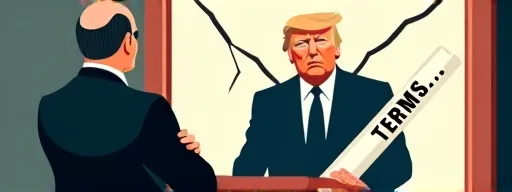
Iran’s chief negotiator, Mohammad Bagher Ghalibaf, declared on Sunday that no agreement with Washington would be approved until the rights of the Iranian people were fully secured, a blunt dismissal of American trustworthiness that widens the chasm between the two sides. The remarks, broadcast on state television, came as reports surfaced that President Donald Trump had returned a “tougher” peace proposal to Tehran, its details undisclosed. Ghalibaf, the parliamentary speaker and a former commander of the Revolutionary Guards, cast the diplomatic corps as “soldiers” confronting an enemy whose “words and promises” counted for nothing, insisting on “tangible results” before Iran would assume any commitments.
The stand-off traces its roots to 28 February, when US and Israeli strikes on Iran’s nuclear facilities derailed ongoing negotiations and ignited a war that has since engulfed the region in sporadic violence. Central to any settlement is the Strait of Hormuz, through which 20 to 25 per cent of global crude transits. Indian analysts tracking energy security have flagged the acute dangers of a prolonged closure, while Asian markets contemplate supply shocks. Tehran’s demands, reiterated in Sunday’s address, include complete sanctions relief, the unfreezing of assets held in foreign banks, and an end to economic coercion—all to be verified before it will yield on its own obligations.
Viewed from Latin America, the Iranian rhetoric mirrors familiar patterns of resource nationalism and diplomatic brinkmanship. Buenos Aires headlines emphasised the call for “garantías concretas”, underscoring a shared scepticism of great-power promises. European observers note the “laborious” nature of the talks, with Tehran’s flexibility hinging on irreversible, verifiable measures. Middle East specialists, for their part, suspect the tougher US terms include intrusive verification protocols that Iran’s revolutionary establishment considers a non-starter, while Trump’s publicly stated lack of urgency, noted in Argentine coverage, suggests a calculation that economic pressure will eventually shift the balance.
The deadlock leaves scant room for compromise. Iran’s deep institutional mistrust of Western commitments, forged through decades of sanctions, militates against an early breakthrough, even as the economic cost of the war mounts. A prolonged stalemate, with neither side climbing down, risks rendering the diplomatic track irrelevant and leaves the global economy exposed to an extended period of uncertainty over a waterway that is both an energy chokepoint and a potential tinderbox. If mutual distrust prevails, the region—and markets—will remain on a knife-edge.
How the same story is told elsewhere.
Iran insists it cannot trust the United States, as US sources claim Trump has sent back tougher terms. Tehran denies having agreed to a nuclear deal and demands full guarantees for its rights before any signature.
Iran turns up the pressure on Washington and makes an end to the war conditional on concrete results and tangible guarantees of its rights. Tehran frames its hard line as a pragmatic necessity when dealing with a partner it considers untrustworthy.
This story appeared in
8 sources · 3 languages · 24h window