Trump’s Hormuz Blockade Risks Global Rupture as China and Allies Push Back
After failed ceasefire talks, the US naval blockade of Iranian ports has slashed tanker traffic, drawing sharp warnings from Beijing and a diplomatic counter-move from London.
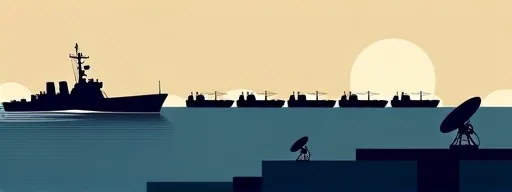
The US blockade of Iran’s ports in the Strait of Hormuz took effect on Monday, immediately choking the world’s most critical oil artery. President Donald Trump, having declared the Iranian navy “completely obliterated”, threatened to “eliminate” any fast-attack boats that challenge the cordon, even as Tehran accused Washington of piracy. The move followed a 21-hour negotiating session in Islamabad that collapsed without a deal, and marks a sharp shift from aerial bombardment to economic strangulation after six weeks of war failed to force Iran’s capitulation.
Viewed from the bridge of a tanker, the consequences were swift and stark. Normally traversed by up to 120 ships a day, the strait saw just a handful of vessels, with Brent crude spiking before easing back below $100 a barrel on Tuesday on whispers of fresh talks. Analysts in London warn of a widening global food crisis, while strategists in Washington note that the longer the closure lasts, the more economic and political pressure mounts on the US and its allies, paradoxically strengthening Iran’s negotiating hand.
International reaction has been sharply divided. China fired an immediate warning, with Defence Minister Dong Jun insisting Beijing would honour its energy agreements with Tehran and “expect others not to interfere”; two Chinese-linked tankers were already forced to turn back. In a dramatic counter-move, British Prime Minister Sir Keir Starmer refused to back the blockade and announced he was assembling a coalition of 40 nations to force the waterway’s reopening, demanding a reversal of the White House’s policy even as he condemned Iran’s initial closure of the strait.
Militarily, Iran retains asymmetric options despite its degraded conventional forces. Its fast-attack craft, shore-based missiles, and drone swarms can still exact a heavy toll on any blockading fleet, raising the spectre of a protracted naval conflict. The US itself appears to be calibrating: officials signalled the interdiction would target only Iranian ports, not neutral shipping, but Trump’s combative rhetoric keeps the fog of escalation thick.
With Pakistan pressing for a second round of talks, possibly as soon as Thursday, the blockade looks like an attempt to enter the next session with maximum leverage. Yet the risk of miscalculation is immense. If the strait stays shut, the deepening economic pain could alienate allies and push China into a direct confrontation. As one commentator noted, Washington and Tehran are forming an “accidental alliance” to strangle global trade, with Beijing emerging as the unlikely advocate for freedom of navigation.
This story appeared in
21 sources · 4 languages · 24h window