Sharaa Presses Trump to Scrap All Syria Sanctions in First Call
The transitional president urged Washington to lift remaining economic measures, as Brussels pledges full relief, amid delicately poised regional diplomacy.
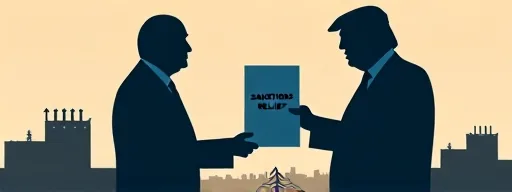
Syria’s transitional president, Ahmed al-Sharaa, has made a direct appeal to Donald Trump for the United States to remove all outstanding sanctions on Damascus, framing the step as indispensable for the country’s economic revival and the return of international investment. The telephone call on 31 May—the first known direct contact between the two leaders—saw Mr al-Sharaa argue that lifting what he termed the “remaining sanctions” would enable the Syrian economy to “restore its activity” and improve living conditions. In response, the American president underlined Washington’s interest in regional stability and the need for intensified diplomacy to prevent further escalation.
The exchange comes as the European Union has separately announced its intention to abolish all its own restrictive measures on Syria. Kaja Kallas, the EU’s foreign policy chief, said the bloc wanted to help Syrians “rebuild a new, inclusive and peaceful Syria.” Viewed from Brussels and other European capitals, sanctions relief is increasingly seen as a prerequisite for any durable settlement. Moscow, too, has long pressed for the removal of economic barriers, arguing that reconstruction is impossible while the country remains under Western financial restrictions. Yet the White House has moved cautiously: while Mr Trump repealed the Caesar Act—the sweeping sanctions imposed on Bashar al-Assad’s regime—in December, his administration has preserved residual measures on specific individuals and entities, citing human rights and security concerns.
The call also traversed the fraught regional landscape. The Syrian presidency’s readout stressed Mr al-Sharaa’s emphasis on dialogue and political paths to reinforce security, a message likely calibrated to reassure Arab governments nervous about instability spilling across borders. From the perspective of Gulf states, which have tentatively re-engaged with Damascus, the conversation signals a potential channel for managing tensions with Iran and Israel. Tehran, the Assad regime’s former patron, will be watching these developments with unease, as any durable Western opening to Syria reduces its own leverage.
Whether Washington will accede to Mr al-Sharaa’s request remains uncertain. Analysts in London note that while the repeal of the Caesar Act removed a major obstacle, the remaining sanctions are targeted and enjoy backing in Congress. The call nonetheless marks a significant shift from the isolation that characterised much of the post-2011 period, and places economic normalisation at the centre of the transitional government’s diplomatic agenda. The coming weeks will test whether the Trump administration is ready to deliver the full relief that Damascus insists is essential for reconstruction—and, by extension, for the stability the White House itself says it seeks.
How the same story is told elsewhere.
The Syrian presidency announced a phone call between al-Sharaa and Trump, during which the Syrian leader stressed that lifting the remaining sanctions is an essential step for reviving the economy. Both sides also discussed regional tensions and underscored the need for diplomatic solutions to maintain stability.
Ahmed al-Sharaa, still referred to by his nom de guerre Jolani, reached out to Trump to request sanctions relief and international backing. The news is met with scepticism, raising questions about the legitimacy of a government led by a former militant chief.
The Syrian presidency said that President al-Sharaa held a phone call with Trump. During the call, al-Sharaa stated that lifting the remaining US sanctions is essential to revive the economy and attract investments.
This story appeared in
10 sources · 1 languages · 24h window