Swalwell and Gonzales both quit US Congress as sex scandals roil both parties
A single Monday saw two congressmen announce resignations under threat of expulsion, plunging the California governor’s race into chaos and shrinking the Republican House majority.
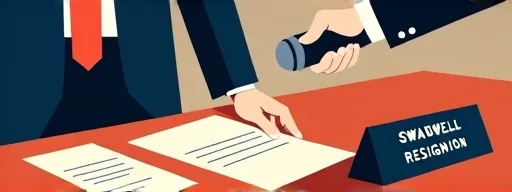
The United States Congress absorbed a double shock on Monday when two sitting members from opposing parties separately announced they would resign rather than face expulsion over sexual misconduct. Democrat Eric Swalwell of California, once a prominent Trump antagonist and a frontrunner for governor, said he would leave the House after multiple women accused him of behaviour ranging from unsolicited explicit messages to rape. He denied the most serious allegations as “false”, but apologised for “mistakes in judgment”. The announcement came a day after he suspended his gubernatorial campaign, and as the Manhattan District Attorney and the House Ethics Committee opened parallel investigations.
Within hours, Texas Republican Tony Gonzales revealed he too would step down, capping a scandal over an affair with a staffer who later died by suicide. Gonzales had already abandoned his re‑election bid in March, but pressure for his immediate expulsion had mounted from both sides of the aisle. His written statement spoke of a season for everything and a divine plan, a markedly different tone from Swalwell’s defensive insistence on due process. Viewed from Washington, the twin departures represent a rare, simultaneous collapse of political careers in an institution that often shields its own.
European observers see a party machine scrambling. Le Temps in Geneva characterised the fallout as a “casse‑tête inattendu” for Democrats, who now face the once‑unthinkable prospect of being shut out of the governor’s race in one of America’s bluest states. The German‑language Tages‑Anzeiger noted Swalwell had once sought the presidency, underlining the vertiginous drop. In Asia, the South China Morning Post presented the resignation as a bow to bipartisan pressure, while Australian Broadcasting Corporation reports linked Swalwell’s role as an impeachment prosecutor against Donald Trump to his high‑profile fall. Across these geographies, the narrative converges on a sense of accelerated accountability.
What happens next carries national implications. California’s open primary, analysed in depth by BBC News, now lacks a clear Democratic frontrunner; former congresswoman Katie Porter and billionaire Tom Steyer are seen as main beneficiaries, but neither commands a united base, and the possibility of two Republicans advancing to the general election is no longer remote. The Los Angeles Times reported that Swalwell’s major donors are scrambling to redistribute support, while “The View” co‑host Sunny Hostin openly urged former Vice President Kamala Harris to reconsider a gubernatorial run, though Harris has shown little public interest. Simultaneously, both vacated House seats will require special elections, further narrowing the Republican majority and complicating legislative arithmetic for Speaker Mike Johnson.
For Swalwell, the rupture with his closest congressional ally, Senator Ruben Gallego, who declared that the women deserved to be believed, illustrated the speed with which political friendships dissolve under legal and media pressure. His wife, Brittany Watts, has remained silent. The husband of one accuser issued a public warning against any attempt to disparage her. In a single day, the personal and institutional consequences of alleged misconduct were laid bare, leaving both parties to manage the fallout in an already volatile election cycle.
This story appeared in
21 sources · 3 languages · 24h window