Putin Vows to Escalate Strikes on Ukraine as Drone War Intensifies
Russian president says intensified attacks on Ukrainian infrastructure aim to deter cross-border drone raids, while downplaying economic damage from recent strikes.
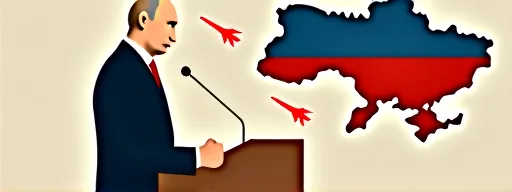
President Vladimir Putin has pledged to significantly increase Russian strikes on Ukrainian infrastructure, framing the escalation as a necessary response to a widening campaign of drone attacks deep inside Russian territory. Speaking to soldiers at a Kremlin ceremony marking Russia Day, Putin said the military would “build up our strikes on the enemy’s infrastructure so as to beat off their desire to attack our civilian objects.” The remarks, carried across state and independent media, signalled Moscow’s intent to raise the stakes in the long-range duel now unfolding far from the front lines.
Viewed from Moscow, the Kremlin’s messaging served a dual purpose: projecting confidence in Russia’s economic resilience while justifying a new wave of retaliatory violence. Putin accused Kyiv of expanding its use of unmanned aerial vehicles “to split Russian society, sow confusion and inflict economic damage,” but insisted “nothing will come of it.” He acknowledged that the strikes had caused harm, yet claimed the economy was recovering swiftly and that no serious problems would arise. This narrative of invulnerability, however, was undercut by the very need to threaten escalation—an admission that the drone campaign is exacting a toll.
Ukraine has markedly intensified strikes in recent weeks, hitting oil refineries and export hubs as far as the Urals, over 1,000 kilometres from the front. Ukrainian officials have described such facilities as legitimate military targets because oil revenues finance Russia’s war effort. Independent Russian-language outlets noted this justification, a perspective largely absent from state-controlled reports. Western military analysts observe that the drone offensive is designed to stretch Russian air defences thin and erode domestic support for the war, precisely the “split” Putin decried. The difficulty of independently assessing the true economic damage—disrupted refining capacity, repair timelines, and export losses—adds a layer of uncertainty to the Kremlin’s assurances of quick restoration.
Putin’s threat to respond “as they deserve” with ever-growing capabilities points to a cycle of escalation that both sides appear willing to sustain. He conceded that Russian forces are advancing “step by step, not as fast as we would like, but every day,” linking the ground war’s slow progress to the need for punishing aerial retaliation. Analysts in London note that the Kremlin’s rhetoric, delivered on a patriotic holiday, aims to frame the drone strikes as an assault on national unity rather than a military setback, thereby mobilising public opinion behind further strikes on Ukrainian cities and energy grids.
As the conflict enters its third year, the exchange of deep strikes is reshaping its geography. Putin’s promise to intensify attacks on Ukrainian infrastructure suggests Moscow will continue to target power plants and logistical hubs, betting that pain inflicted on Ukraine’s civilian economy will erode Kyiv’s will to strike back. Yet the Ukrainian drone programme has demonstrated a capacity to reach ever further into Russia, challenging the Kremlin’s ability to insulate its population from the war’s consequences. The coming weeks will test whether escalation can truly “beat off the desire” to attack, or merely harden it.
How the same story is told elsewhere.
Putin vowed to ramp up strikes on Ukrainian infrastructure to deter Kyiv from hitting Russian civilian targets, stressing that attempts to split Russian society will fail. Russian authorities frame the escalation as a necessary response to Ukrainian provocations, downplaying the economic impact of enemy attacks.
Putin accused Ukraine of using drones to sow confusion and damage Russia's economy, while admitting that Ukrainian strikes have caused damage. He vowed to step up attacks on Ukrainian infrastructure to deter further strikes, but Ukraine continues to hit deep inside Russia.
This story appeared in
4 sources · 2 languages · 24h window