Pope Leo XIV Makes Historic Address to Spanish Parliament, Condemning Rearmament and Polarisation
In the first papal speech to Spain’s Cortes, Leo XIV denounced the arms race, demanded solidarity with migrants, and called for life to be safeguarded from conception to natural death.
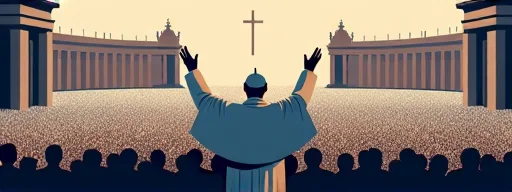
Pope Leo XIV brought his week-long apostolic journey to Spain’s political heart on Monday, becoming the first pontiff to address a joint session of the Cortes Generales. Only hours after a private meeting with Prime Minister Pedro Sánchez, the American-born pope used a wide-ranging speech to frame the world as undergoing “a profound spiritual and cultural crisis” manifest in violence, polarisation and mutual distrust. The address, delivered in Spanish and greeted with repeated applause, set a markedly political tone for a visit already marked by a massive open-air Corpus Christi Mass the previous day, where more than 1.2 million faithful had packed Madrid’s Plaza de Cibeles. [A5][A9][A1]
Before the assembled deputies and senators, Leo XIV firmly rejected the notion that rearmament was an “almost inevitable” response to international instability, insisting that true security “is born of justice, patient dialogue and respect for international law”. His words resonated far beyond the chamber: German and Italian coverage highlighted the direct challenge to Europe’s recent military build-up, while the pontiff took aim at the politics of polarisation, warning that “firmness does not require disdain, disagreement does not entail humiliation” – a message aimed squarely at right-wing populists who have agitated against migrants, notably Spain’s Vox party. [A2][A7][A10]
The speech equally waded into Spain’s domestic moral debates. In a country where the Socialist-led government has legalised euthanasia and is seeking to enshrine abortion rights in the constitution, Leo XIV declared that every human life must be “recognised and safeguarded from conception until its natural end”. He framed the defence of the unborn, the elderly and the vulnerable as “a goal of civilisation”, not a confessional interest. French-language reports noted the pointed juxtaposition with the Sánchez government’s agenda, while Italian outlets emphasised the pope’s parallel call for moral renewal, telling legislators that institutional reforms are insufficient without an ethical revival that fights corruption. [A11][A19][A11]
Earlier, the Pope had presided over a sun-drenched Corpus Christi liturgy dressed in a chasuble inspired by Picasso’s circle, urging Spain not to let its storied religiosity become “a museum of the past” but a living school of faith. The joyous crowd, however, could not obscure the scandals plaguing the Church. In a subsequent closed-door meeting with victims of clerical sexual abuse and in a blunt address to Spanish bishops, the pope labelled the abuse a “scourge” and demanded “truth, justice and reparation”. Some victims’ associations complained they were excluded, calling the official encounter a “blow”. Meanwhile, Leo XIV robustly defended the inviolability of the confessional seal, a point recently contested in France, insisting that no state may breach it. [A1][A26][A28][A6][A4]
The Pope’s itinerary, which later includes the inauguration of a Sagrada Familia tower in Barcelona and a visit to the migrant gateway of the Canary Islands, underscores his intention to bind spiritual witness to concrete humanitarian advocacy. Viewed from Washington, the pontiff’s forceful tone on global leadership and migration echoes his earlier interventions, but delivered on Europe’s soil it carries fresh weight. Analysts in London note that Leo XIV is positioning the Vatican as a counterweight to both illiberal populism and an uncritical rearmament consensus, while Madrid observers see a Church reasserting its presence in a nation where self-identified Catholics have fallen from 90% in the 1970s to just over half. Whether the moral language will translate into legislative change remains uncertain, but for a week in June, Leo XIV has undeniably reframed Spain’s public conversation.
How the same story is told elsewhere.
The Pope's visit to Spain marks a historic event, with over a million faithful attending mass in Madrid and viral gestures showing a connection to popular culture. Addressing Parliament, Leo XIV defended the seal of confession and condemned rearmament, offering an ethical vision that challenges secularist trends. The massive turnout and clear tones demonstrate a Church capable of drawing crowds and shaping public debate.
The historic speech to Spain's parliament denounced a profound crisis, demanding respect for migrants, human dignity, and accountability for clerical abuse. Even in a secular country, the Pope's words highlighted the contradictions of a Church striving for moral renewal while still grappling with the abuse scandal. The visit reveals a delicate balance between moral authority and institutional credibility.
The papal visit to Spain was marked by a massive mass and a strong condemnation of abortion, defending life from conception. The Pope also demanded reparation for victims of abuse, blending a conservative moral agenda with a call for institutional justice. The event was portrayed as a triumph of traditional values and a challenge to progressive reforms.
The urgent warning to Spain's parliament depicted a world in deep spiritual crisis, explicitly linking it to ongoing conflicts such as the renewed Israel-Iran hostilities. The Pope condemned military escalation and called for a response to the tragedy of migration, placing his message within the context of Middle Eastern turmoil. Coverage highlighted the pontiff's anti-war stance as a moral imperative for global peace.
This story appeared in
27 sources · 7 languages · 24h window