Iran Fires Warning Missiles at Israel, Threatens ‘Crushing’ Response to Retaliation
Tehran’s missile salvo, described by the IRGC as a ‘warning’, follows an Israeli strike on Hezbollah in Beirut. Washington signals readiness to defend its forces, while the IAEA presses for answers on Iran’s nuclear programme.
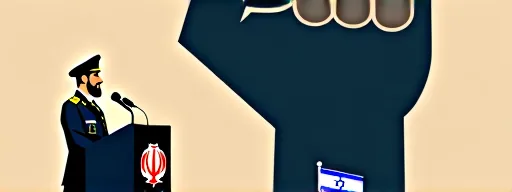
Iran launched a salvo of missiles at Israel late on Sunday, in what the Islamic Revolutionary Guard Corps (IRGC) described as a “warning” after an Israeli strike on a Hezbollah command and planning centre in south Beirut. The Israeli military confirmed it had detected the incoming rockets and activated its defence systems, with no immediate reports of significant damage or casualties. The attack, which appeared to originate from the western Iranian province of Kermanshah according to social media reports, broke weeks of relative calm and signalled a sharp escalation in the long-running shadow war.
In statements following the barrage, the IRGC declared that the operation was “merely a warning” and that any Israeli retaliation would be met with “more extensive” strikes, encompassing “all American-Israeli targets in the region”. Senior commanders of Iran’s Khatam al-Anbiya military headquarters echoed the threat, warning that if Israel continued or expanded its operations in south Lebanon, it would face “more crushing and regrettable blows”. The IRGC-linked Tasnim news agency, quoting an unnamed military source, said that a “suitable volume” of missiles was ready for immediate launch against a wider target list, raising the spectre of a broader confrontation.
Behind the public threats, exclusive details obtained by Iran International reveal a picture of tense decision-making within Iran’s power structure. Two sources close to the IRGC said that missile units were placed on full alert in the hours after the Beirut strike and that senior commanders formally requested authorisation from the office of Mojtaba Khamenei — the newly acknowledged supreme leader-designate — to proceed with the salvo. The sources noted that, as of late Sunday, no response had been received, suggesting either deliberate restraint or internal divisions at the highest level.
The crisis rippled across diplomatic and military channels. A United States defence official told Axios that American forces in the Middle East were “prepared to defend” themselves and their interests should Iran follow through on its threats. Meanwhile, at the International Atomic Energy Agency’s Board of Governors in Vienna, the US was reportedly rallying support for a draft resolution demanding that Tehran explain the status of its uranium enrichment programme and of nuclear facilities recently struck by Israeli-linked sabotage. The resolution, circulated ahead of this week’s quarterly meeting, adds a nuclear dimension to an already volatile regional standoff.
Viewed from Western capitals, Iran’s calibrated response — a limited warning shot rather than a saturation attack — appeared designed to demonstrate solidarity with Hezbollah without triggering an all-out war. Yet the public exposition of its internal command hesitancy, combined with the explicit threat to American regional assets, injected new uncertainty. Analysts caution that the cycle of strike and retaliation, each side testing the other’s red lines, leaves little margin for miscalculation. With both Israel and Iran vowing devastating retaliation for any further provocation, the coming hours will test whether the latest escalation can be contained or marks the opening of a perilous new chapter.
How the same story is told elsewhere.
Tehran warns that any Israeli retaliation for Iran's missile strikes will trigger an even more massive barrage, with a large salvo already poised to hit a wider set of targets across the occupied territories. Iran declares full readiness for a large-scale war and demands the Zionist regime halt its attacks on southern Lebanon and Dahieh at once.
The Israeli military detected rocket launches from Iran heading towards its territory and activated defense systems to intercept them. US officials said American forces in the region are on standby to defend against any renewed attacks by the Islamic Republic.
This story appeared in
6 sources · 2 languages · 24h window