Iran demands $24bn asset release as talks stall and warns of ‘dark tunnel’
Talks are deadlocked and Trump must free $24bn in frozen assets, top Iranian aide tells CNN; warns of wider war, yet downplays risk of resumption.
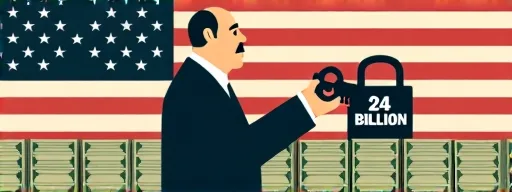
Talks between Washington and Tehran over a potential peace agreement have hit an impasse, with Iran’s leadership conditioning any deal on the immediate release of $24 billion in frozen assets, a senior Iranian official told CNN on Friday. Mohsen Rezaei, military adviser to Supreme Leader Mojtaba Khamenei, said the negotiations were “at a deadlock” and that “the ball is in Trump’s court” — a blunt demand that underscores Tehran’s insistence on tangible economic concessions before any lasting accord.
Speaking from the Iranian capital, Rezaei outlined a two-stage process: $12 billion would be unfrozen once an interim agreement is signed, with the remainder following later. US officials, however, view the proposal with deep scepticism, fearing that relinquishing control over the funds would eliminate one of their principal sources of leverage. “This is our own money, not America’s money,” Rezaei countered, framing the release as a test of American sincerity.
The dispute is freighted with wider regional implications. Rezaei warned that any resumption of hostilities would plunge the United States into a “dark tunnel” and potentially expand the conflict beyond the Persian Gulf. Yet in a separate remark, he also appeared to downplay the immediate risk, saying the chances of renewed war had “receded and become weak” — a rhetorical duality that reflects Tehran’s desire to keep diplomatic channels open while preserving its deterrent posture. Viewed from Washington, the impasse reinforces the administration’s calculation that Iran’s financial desperation is itself a pressure point.
European and Middle Eastern analysts note that the deadlock is compounded by the apparent impossibility of a direct leaders’ summit. Reports from Tehran indicate that a meeting between Donald Trump and Mojtaba Khamenei has been ruled out, eroding hopes for a breakthrough at the highest level. As both sides dig in, the narrow path to de-escalation rests on confidence-building measures — yet the very mechanism Tehran proposes is one Washington deems too risky. Whether the Trump administration is willing to unblock the funds in exchange for a halt to hostilities remains the central, unresolved question.
How the same story is told elsewhere.
Iran's demand to release frozen assets is seen as a test for Trump. US sources worry that giving up financial leverage would remove a key pressure tool against the regime. Negotiations are deadlocked, and the ball is in America's court, with the specter of wider conflict.
Tehran dictates terms for a deal, demanding the immediate release of frozen funds. Trump brushes off the demand, noting that the Iranians, though proud, have no other choice. European observers view the hardening of positions with skepticism.
The Iranian demand for $24 billion is seen as a negotiating obstacle. In Washington, there is concern that releasing the funds would strip the administration of a decisive financial lever. Business observers view the deadlock with pragmatism, aware that economic pressure remains a key instrument.
This story appeared in
11 sources · 3 languages · 24h window