Iran and Oman to charge ships up to $2m for Strait of Hormuz passage
Tehran and Muscat are jointly imposing transit fees on vessels navigating the strategic waterway, framing them as payment for security, environmental and navigation services as the strait reopens after months of conflict disruption.
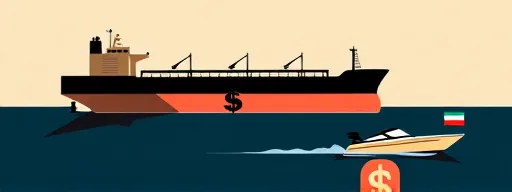
A new era for commercial shipping through the Strait of Hormuz is taking shape as Iran and Oman finalise a joint mechanism to levy fees on vessels passing through the waterway. Iran’s ambassador to Moscow, Kazem Jalali, told the Russian daily Izvestia that the strait “will be open, but with new conditions to be determined by the Iranian and Omani authorities” and that fees would be charged for services provided by the two coastal states. The announcement, made more than a hundred days after conflict-related disruptions slashed oil flows through a chokepoint that normally carries a fifth of the world’s petroleum, signals a determined effort to recast the terms of transit under the legal banner of sovereign rights.
Tehran is eager to distance the new system from any suggestion of extortion. Mohsen Zanganeh, a member of the Iranian parliament’s budget committee, disclosed that between $1.5 million and $2 million per vessel is being collected daily, with payments made in cash, cryptocurrency or through barter of goods and services, all deposited directly into the national treasury. “We neither want ransom nor a toll; we only take the right for providing security and services to ships,” he said. A twelve-point management plan for the strait, overseen by the Supreme National Security Council, has been put in place. Adding an environmental dimension, Shina Ansari, head of Iran’s Department of Environment, stressed that under the international-law doctrine of innocent passage, coastal states are entitled to charge for navigation aids, marine environmental protection and compensation for pollution damage.
Viewed from New Delhi, the reassurances carried a different tone. India’s petroleum minister, Hardeep Singh Puri, acknowledged a sharp decline in vessel movements through Hormuz amid the Iran-Israel confrontation but sought to calm domestic fears of a fuel-price spike, noting that petrol prices in India have not risen since 2022 despite global volatility. The economic stakes are immense: before the latest hostilities, the strait channelled roughly one-fifth of the world’s oil; even now, with a handful of tankers recently leaving the Gulf, crude and liquefied natural gas flows remain severely constrained.
Analysts in London and Washington will be watching whether Tehran’s carefully crafted framing – a service fee, not a political levy – survives legal scrutiny and market acceptance. The partnership with Oman lends the arrangement a bilateral legitimacy, yet any mandatory charge on a global maritime artery inevitably raises concerns over freedom of navigation. As reconstruction costs mount and war fatigue sets in, the Hormuz fee regime may prove more durable than a temporary wartime measure, setting a precedent that other chokepoint states could be tempted to follow.
How the same story is told elsewhere.
Iran frames the new transit regime as a lawful exercise of sovereignty and a service to navigation, not extortion. After the war disrupted shipping, the strait is reopening under joint Iran-Oman management with fees covering security, rescue, and environmental protection — a scheme maritime nations reportedly accept without challenge.
The Strait of Hormuz will reopen under conditions set by Tehran and Muscat, including a transit fee, after months of war that choked off oil flows. Shipping remains severely constrained, raising concerns about global energy markets and the cost of passage through the world's key oil chokepoint.
With oil traffic through the Strait of Hormuz still disrupted by the Iran-Israel conflict, India is bracing for potential fuel price shocks, though the government insists pump prices have been stable since 2022. The Persian Gulf chokepoint is set to reopen with transit fees, compounding uncertainties for import-dependent economies.
Iran's ambassador in Moscow stated that the Strait of Hormuz will reopen only on payment of a transit fee, with terms to be worked out jointly with Oman. The move is presented as a necessary condition for restoring normal shipping through the region's main oil artery.
This story appeared in
8 sources · 4 languages · 24h window