Iran Accuses Trump of Diplomatic Betrayal as Naval Blockade Continues
Tehran says Washington is reneging on pledges to ease maritime restrictions, deepening mistrust in fragile nuclear negotiations and raising the spectre of military escalation.
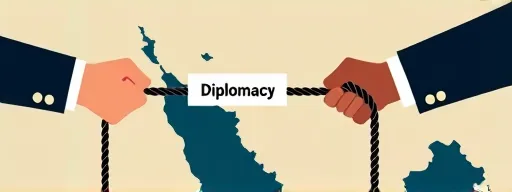
Iran’s leadership has accused President Donald Trump of betraying diplomacy for the third time, alleging that the United States continues to enforce a maritime blockade on Iranian vessels despite public pledges to remove it. Mohsen Rezaei, a senior adviser to the Supreme Leader, said on Saturday that the continuing restrictions and “excessive demands” in negotiations proved Washington was not serious about talks. The sharply worded rebuke came after Iranian sailors reported fresh warnings from US warships operating near the Strait of Hormuz, according to state-linked media.
The row over the naval blockade has become emblematic of the profound mistrust plaguing indirect contacts between the two old adversaries. Viewed from Washington, the Trump administration has sought to maintain pressure while exploring a possible extension of a fragile ceasefire with Iran. A White House meeting of top aides aimed at agreeing a “final decision” on the terms ended without a clear course of action, suggesting internal divisions. In parallel, Defence Secretary Pete Hegseth declared that US forces were “ready for all scenarios”, a signal of continued military readiness.
From Tehran’s perspective, such mixed signals confirm long-held suspicions that the White House is using negotiations as a cover for regime change. Iranian agencies quoted a senior military official saying US Navy vessels had ordered Iranian ships to stay behind a designated “blockade line”, contradicting Trump’s earlier announcement of an end to the blockade. Rezaei had previously warned China’s CGTN network that Iran would break the siege “either through negotiation or, if not, through direct action”. Officials also dismissed Trump’s public descriptions of a prospective agreement as “a mixture of truth and lies”, intended to make the United States appear the victor.
The strategic stakes are enormous, as any miscalculation in the narrow waterway through which a fifth of global oil passes could set off a wider conflict. Iran has signalled its own disruptive capacity, with Rezaei asserting that Tehran had “shut down the strait” – an apparent reference to heightened naval posturing. Analysts in the region note that while both sides continue to insist they prefer a diplomatic path, the escalating rhetoric and on-the-ground realities are steadily eroding the space for compromise. Without a tangible step to relieve maritime pressure, the current impasse risks spiralling into precisely the confrontation both claim to want to avoid.
How the same story is told elsewhere.
Iran charges the US president with betraying diplomacy for the third time, maintaining a naval blockade while making excessive demands. Tehran insists Washington has no genuine interest in talks and vows to break the blockade through direct action if negotiations collapse.
The dispute between Washington and Tehran deepens as Iran claims US promises to lift the naval blockade remain unfulfilled, while US officials say restrictions have already been removed. Iranian sailors report ongoing warnings from American warships, casting doubt on both sides' accounts.
Tehran states that the US president is not genuinely interested in negotiations, continuing naval pressure and setting exaggerated conditions at the negotiating table. The Iranian denunciation portrays diplomacy as a pretext and signals a coercive approach from Washington.
This story appeared in
6 sources · 4 languages · 24h window