IAEA's Grossi Calls on Iran to Re-engage Over Bombed Nuclear Sites
Rafael Grossi urges Iran to resume inspections at sites bombed by the US and Israel a year ago, as Western powers table a resolution. Tehran accuses the IAEA chief of dishonesty, citing an earlier report questioning its programme's peaceful intent.
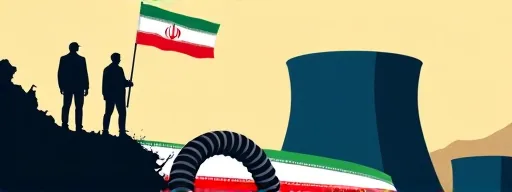
Rafael Grossi, director-general of the International Atomic Energy Agency, on Monday appealed directly to Iran to “re-engage” with the watchdog, as Western powers tabled a draft resolution at the agency’s Board of Governors demanding restored access to nuclear sites bombed by the United States and Israel a year ago. The sites, struck in June 2025, housed uranium enriched to near weapons-grade, yet Tehran has still not informed the IAEA of the fate of the material or the facilities themselves. While the airstrikes destroyed or severely damaged enrichment infrastructure, Western assessments suggest a significant portion of the high-enriched uranium — including stocks at 60 per cent purity, a short technical step from the 90 per cent threshold for a bomb — survived the attacks.\n\nThe operational picture remains deeply fractured. The IAEA suspended all field verification activities in Iran in February 2026 owing to the wider military conflict, and only last week was a single routine inspection conducted, at the Bushehr nuclear power plant. No other declared facilities have been visited, and for nearly a year the agency has had no access to the damaged sites. As a result, Grossi acknowledged, the IAEA has lost continuity of knowledge over the quantities of declared uranium reserves — a gap that, viewed from Washington and European capitals, fundamentally undermines the ability to verify the peaceful nature of Iran’s programme.\n\nFrom Tehran, the response has been one of outright defiance and personal attack. Iranian state-aligned media branded Grossi a liar, seizing on his claim at a press conference that “the agency never said Iranians are producing nuclear weapons.” They pointed to his own report of 31 May 2025 — issued just days before the June airstrikes — in which he stated that the IAEA “cannot assure that Tehran’s nuclear programme is solely peaceful.” That same day, Iran’s foreign ministry and atomic energy organisation issued a joint statement rejecting what they called a biased report, insisting that all nuclear activities were declared and peaceful. The episode illustrates the depth of mistrust: where Western governments see a necessary accountability mechanism, Iranian officials perceive a politically weaponised agency whose director-general, in their view, shifts his rhetoric to suit the Board’s agenda.\n\nThe diplomatic stakes are considerable. The US-led resolution, if adopted, risks deepening the strains that have already complicated parallel ceasefire and nuclear talks. The loss of continuity of knowledge, combined with Iran’s refusal to grant access, leaves the international community without a clear picture of where substantial quantities of near-weapons-grade uranium are located — a concern that resonates not only in Washington but also in Gulf capitals and Israel. Analysts in London note that the resumption of even a routine inspection at Bushehr, while a modest confidence-building step, does nothing to resolve the core dispute over the bombed sites. With Iran accusing the IAEA chief of dishonesty and the West insisting on accountability, the space for a negotiated return to comprehensive safeguards appears vanishingly narrow.
How the same story is told elsewhere.
The IAEA voices alarm over the Iranian regime's continued communication blackout and urges it to resume cooperation so inspectors can access nuclear sites bombed by the US and Israel. Western powers are pushing a board resolution because Tehran has not disclosed the fate of nuclear materials, including uranium enriched to near weapons-grade, raising serious proliferation concerns.
The IAEA director general is accused of lying about his past statements on Iran's nuclear program, falsely claiming he never said Iran was building a bomb. He is portrayed as a key driver of the crisis, while Iran highlights that inspections have partially resumed at Bushehr, challenging the narrative of total non-cooperation.
The IAEA chief has urged Iran to re-engage and allow inspections at sites struck by US and Israeli airstrikes a year ago. The appeal comes as Western powers advance a draft resolution at the agency's board, amid ongoing uncertainty over the status of nuclear materials and stalled diplomatic talks.
This story appeared in
5 sources · 3 languages · 24h window