Hungary’s New PM Threatens Constitutional Overhaul to Oust Orbán-Era President
Péter Magyar pledges constitutional changes to remove holdover President Sulyok, setting up a constitutional clash that threatens Hungary’s rule-of-law credentials.
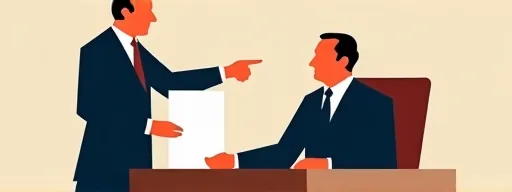
Hungary slid into constitutional crisis this week after President Tamás Sulyok ignored a deadline set by the new prime minister to resign, prompting Péter Magyar to announce unprecedented steps — including amending the constitution — to force him from office. The standoff is the sharpest test yet of the fledgling government’s pledge to dismantle the legacy of Viktor Orbán, whose 16-year rule ended with a crushing electoral defeat in April. Sulyok, a former Constitutional Court judge installed in February 2024 by the Fidesz-dominated parliament without a direct popular vote, has become the most visible symbol of the ancien régime that Magyar vows to purge.
At midnight on Sunday, the 31 May ultimatum expired, and on Monday Magyar visited the presidential residence for what he later described as a fruitless meeting. ‘If he does not change his position and resign voluntarily, we will start the necessary procedures in parliament today,’ he told a live press conference, floating both impeachment and constitutional amendments. His Tisza party commands a two-thirds supermajority, enough to rewrite the basic law without opposition support. Magyar insisted he would not resort to legislation ‘tailored to a specific person’ but rather restore the rule of law, a promise likely to be scrutinised as his allies initiated the estimated month-long process of removing the head of state.
Sulyok responded on social media, accusing Magyar of ‘political exploitation of the basic law’ and warning that the deepening crisis ‘undermines the international perception of Hungarian democracy.’ In a widely noted move, he appealed to the Council of Europe’s Venice Commission for a legal opinion, signalling readiness for a protracted institutional struggle. He directly linked the impasse to the release of billions of euros in frozen EU funds, arguing that the government’s actions jeopardise the very benchmarks of judicial independence and rule of law that Brussels demands — a line of defence that reframes the standoff as a European issue rather than a domestic power grab.
Magyar’s offensive is not limited to the presidency. He has also demanded the resignations of the chief prosecutor and the head of the state audit office, dismissing them as puppets of the Orbán era. The new premier has sought to frame the purge as a restoration of democracy after years of democratic backsliding, but analysts in Brussels note a paradox: a forced removal of constitutional officers by a supermajority, even with amended procedures, may attract the very criticism that the EU once levelled at Orbán. Markets remained cautious, and diplomats in Washington and Berlin are watching for any sign that the new administration might replicate the strongman playbook of its predecessor.
For now, Sulyok remains in office, and Hungary’s constitutional architecture trembles. Whether Magyar opts for the blunt instrument of impeachment — technically permitted but rarely invoked — or a broader constitutional revision, the outcome will reverberate beyond Budapest. The government’s ability to manage the transition without triggering a deeper legitimacy crisis will define its international standing and test its commitment to the democratic renewal it has promised.
How the same story is told elsewhere.
New Hungarian Prime Minister Péter Magyar is moving to dismantle the institutional legacy of Viktor Orbán, but faces resistance from President Tamás Sulyok, who was appointed under the previous government. After a deadline for voluntary resignation expired, Magyar announced he would use his parliamentary supermajority to amend the constitution and remove the president. The standoff marks an early test of the new administration’s ability to overhaul a state still staffed by Orbán loyalists.
Prime Minister Magyar has threatened to force President Sulyok out of office, prompting Sulyok to accuse him of politically motivated exploitation of the constitution. The president warned that the move risks a constitutional crisis, deepens social rifts, and damages the international image of Hungarian democracy. Russian sources highlight that Sulyok spoke out on a platform blocked in Russia, framing the standoff as a destabilizing power struggle.
New Hungarian Prime Minister Péter Magyar is moving to remove President Tamás Sulyok, a figure appointed under former leader Viktor Orbán, as part of a broader effort to purge Orbán-era officials from public institutions. After the president refused to resign, Magyar announced he would trigger legal mechanisms, including a possible constitutional amendment, to force him out. The center-right Tisza party, which ended sixteen years of Orbán rule, frames the removal as a key step to consolidate democratic change.
This story appeared in
9 sources · 4 languages · 24h window