Goblin shark seen alive as whales face entanglements across the globe
From a first-ever deep-sea sighting to a boy's prehistoric fossil find, recent events reveal the ocean's enduring power to astonish and alarm.
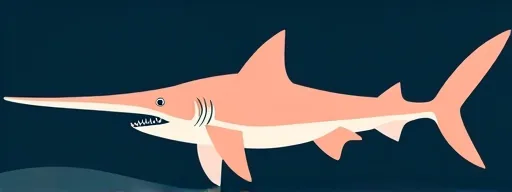
The first confirmed observation of a goblin shark in its natural habitat—a milestone two years in the telling—has underscored how little we know of the ocean's deepest reaches. Marine biologist Alan Jamieson had abandoned hope of ever seeing the creature alive, but a baited camera deployed in the Pacific's Tonga Trench captured the elongated, protrusible-jawed shark at thousands of feet below the surface. "The most iconic of all the deep-sea sharks," Jamieson said, noting that colleagues in Hawai'i also recorded one. The discovery, reported this week, transforms an animal previously known only from dead or dying specimens hauled up by fishermen. Far from any coastline, in the American Midwest, an 11-year-old boy on a geology club outing in Kansas unearthed the fossilised bones of a 15-foot Tylosaurus, a marine reptile that dominated Cretaceous seas 85 million years ago. The find has set young Corbin Bullard on a path toward palaeontology, a reminder that the ocean's past still surfaces in unexpected places.
Yet the same days brought stark reminders of the ocean's present distress. In the Gulf of St. Lawrence, a five-year-old North Atlantic right whale—one of fewer than 400 remaining—was spotted entangled in fishing gear off New Brunswick and again near Quebec's Îles-de-la-Madeleine. Rough weather thwarted efforts to attach a satellite tracker, and any rescue attempt will depend on improving conditions. Farther east, a dead humpback whale wrapped in rope washed ashore at Spaniard's Bay, Newfoundland, forcing local officials to weigh grim options: towing and sinking the 12-metre carcass, moving it to an uninhabited cove, or cutting it up for landfill. In South Australia, four dolphins were found dead along the Adelaide coastline in a matter of days, including a well-known Port River dolphin named Zoom. Necropsies are underway, but the spate of deaths has alarmed environmental authorities.
The longevity of marine life was dramatically illustrated by a discovery in Alaska, where Inuit hunters in 2007 recovered fragments of a 19th-century explosive harpoon from a freshly caught bowhead whale. The weapon, manufactured between 1885 and 1895, allowed scientists to estimate the animal's age at roughly 115 years, confirming that bowheads can live beyond 200 years—the longest-lived mammal on Earth. This historical echo, like the Kansas fossil, reveals how human artefacts and natural remains intertwine to tell stories across centuries.
On shorelines and in laboratories, human encounters with nature took other forms. A family from Prince Edward Island secured an accessible RV to fulfil a woman's dying wish to see the icebergs off Newfoundland, a poignant journey made possible by community support. In Cornwall, police are searching for a man who allegedly punched a seagull on a St Ives beach after it swooped on his food, leaving the bird in extreme shock—a flashpoint in the perennial tension between tourists and wildlife. And in Washington State, forensic genetic genealogy has identified skeletal remains found in a sleeping bag in Olympic National Park as Joseph Louis Serrao Jr., missing for decades. While the cause of death remains unknown, the breakthrough illustrates how DNA technology is resolving cold cases, much as it helps biologists unlock the secrets of ancient harpoons and deep-sea sharks. These disparate events, viewed together, reveal a world where the ocean's mysteries are being unveiled even as its inhabitants face mounting threats, demanding both scientific curiosity and urgent conservation.
How the same story is told elsewhere.
The Atlantic bloc covers a range of marine stories with a factual, sometimes concerned tone about human impact, but maintains a detached, descriptive approach. News ranges from scientific discoveries to environmental incidents without excessive emotional emphasis.
The Indian bloc highlights the grandeur of deep-sea discoveries and inspirational stories of young fossil hunters, celebrating scientific achievements with a triumphal tone but also a hint of skepticism toward overly enthusiastic narratives.
The Latin American bloc presents a historical perspective on whale longevity, focusing on the animal's age and the 19th-century weapon embedded in its body, with a detached and pragmatic approach.
This story appeared in
9 sources · 3 languages · 24h window