France, UK Intercept Russian Oil Tanker in Atlantic, Kremlin Decries ‘Piracy’
French naval commandos boarded the Tagor near Brittany, with British support, as part of a widening crackdown on Moscow’s sanctions-evading shadow fleet. Russia condemned it as illegal.
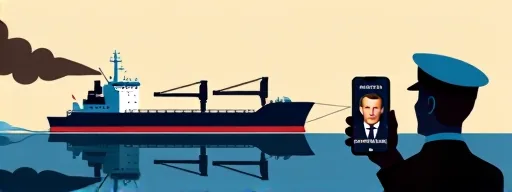
France and the United Kingdom have jointly intercepted a sanctioned Russian oil tanker in international waters of the Atlantic, deepening a European campaign against the shadow fleet that funds Moscow’s war in Ukraine. The Tagor, a tanker suspected of ferrying Russian crude in defiance of Western sanctions, was boarded by French naval commandos on Sunday morning approximately 400 nautical miles west of Brittany. President Emmanuel Macron announced the operation on social media, releasing dramatic footage of troops rappelling from a helicopter onto the vessel. “It is unacceptable for ships to circumvent international sanctions, violate the law of the sea, and fund the war that Russia has been waging against Ukraine for more than four years,” he declared. French authorities said the operation was carried out in close coordination with the United Kingdom and other partners, and in strict compliance with maritime law.
The Kremlin responded with fury, branding the seizure illegal and “bordering on international piracy”. Spokesman Dmitry Peskov declared that Russia would take measures to safeguard its cargoes in light of what he termed a blatant violation of international law. Moscow’s embassy in Paris claimed the vessel’s captain was a Russian citizen, but said it had received no official notification from French authorities. Prosecutors in the port of Brest opened a criminal investigation after the captain reportedly refused to obey the navy’s orders. The Tagor, which had sailed from Murmansk and was flying a Cameroonian flag, was being escorted to a designated anchorage for further inspection, according to the Maritime Prefecture for the Atlantic.
The interception is the fourth such operation by France since September, signalling a more assertive European posture against the clandestine fleet that Russia has assembled to circumvent an oil price cap and broader sanctions. Viewed from London and Paris, the action reinforces the message that the integrity of global sanctions regimes will be defended on the high seas. Analysts note that the shadow fleet, often consisting of ageing vessels with opaque ownership and falsified documentation, poses environmental risks as well as security threats. By seizing the Tagor rather than simply issuing fines as in previous cases, France and Britain appear to be escalating their enforcement.
From a Russian perspective, the move represents another Western encroachment on sovereign rights, likely to strain diplomatic channels already frozen by the conflict. Meanwhile, the evolving practice of multinational interdictions could face legal challenges and fuel debates over the boundaries of permissible enforcement on the high seas. If this trend widens to include more partners, it may significantly disrupt the logistical networks that sustain Russia’s war economy, but it also risks tit-for-tat responses that could further militarise maritime choke points.
How the same story is told elsewhere.
The Kremlin strongly condemns France's detention of the tanker Tagor as illegal and bordering on state piracy, rejecting the claim that it complied with international law. Moscow warns it will take measures to secure its cargoes and frames the interception as a unilateral, anti-Russian act under false sanctions pretexts.
The French Navy, with UK backing, intercepted a sanctioned Russian 'shadow fleet' tanker on the high seas, in what is framed as a necessary enforcement of international law. The move aims to stop sanctions evasion, cut off funding for Russia's war against Ukraine, and counter the environmental and security risks such unregulated vessels pose.
South Asian media prominently amplify the Kremlin's furious response, quoting its accusation that France's seizure borders on 'international terrorism'. The framing elevates the incident into a major diplomatic crisis and an alleged Western overreach, downplaying the sanctions-enforcement narrative in favor of Moscow's victimhood and warning of countermeasures.
This story appeared in
36 sources · 12 languages · 24h window