Ferrari’s Electric Gamble: Luce Roils Purists Yet Commands Full Order Books
Despite online derision and a stock dip, the all-electric five-seat grand tourer draws buyers through 2027, echoing Porsche’s Cayenne storm.
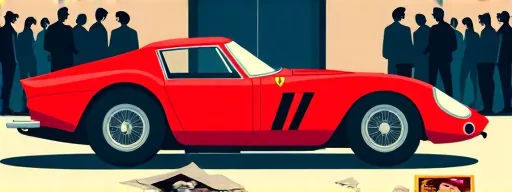
The unveiling of the Ferrari Luce in Rome was meant to be a triumphant moment, attended by President Sergio Mattarella and Pope Leo. Instead, it exposed deep divisions. Social media erupted with mockery of the design, conceived by Apple’s Jony Ive, and Ferrari shares tumbled 8 per cent the following day. At a sticker price of roughly $640,000, the car’s bulbous, five-seat silhouette bore little resemblance to Maranello’s iconic mid-engined supercars, prompting cries that the brand had abandoned its soul.
Yet beneath the uproar, another narrative took shape. Company executives told Bloomberg that order books are filled through the end of 2027, embracing both loyalists and a fresh cohort of buyers drawn to the 550,000-euro electric grand tourer. “We are reaching a completely new customer,” Ferrari CEO Benedetto Vigna noted, dismissing the design critiques as a transient phenomenon. From Zurich to Singapore, dealerships reported brisk demand, suggesting that for every detractor online, a cheque has been written in earnest.
To understand the phenomenon, analysts in London draw a parallel with Porsche’s Cayenne launch two decades ago. Then, too, purists howled that an SUV would dilute the brand. But the Cayenne became Porsche’s global cash cow, funding its sports-car programmes. The Luce, observers in São Paulo note, enters a segment already occupied by the Porsche Taycan and Audi e-tron GT, but as a Ferrari it carries a different cachet. Asian markets, particularly China, have shown strong appetite for high-margin luxury EVs, a space where homegrown brands are ascendant. Ferrari’s gambit may be less about conquering benchmarks and more about surviving a tectonic industry shift.
The Luce is undeniably a radical departure: a heavy, four-door, all-electric GT that reimagines the prancing horse for an electrified era. Italian commentators see it as a necessary, if jarring, evolution. The marque’s history, after all, is replete with disruption — from mid-engined layouts to turbocharging and hybrid hypercars. The question now is whether the Luce will follow the Cayenne’s path of contempt-turned-success or languish as a symbol of overreach. In a world where Chinese EV makers are rapidly gaining ground, Ferrari’s all-out bet on the Luce reveals as much about regulatory pressure and market survival as it does about design daring. The marque may have traded a little of its aesthetic purity, but the order books suggest that, for many, the allure of the badge remains undimmed.
How the same story is told elsewhere.
Despite harsh online mockery of its design, Ferrari's first electric model is seeing a surge in demand. The order books are already full until the end of 2027, proving that both longstanding and new customers are embracing the marque's electric shift.
Ferrari wanted to challenge Chinese EV makers with the Luce, but the backlash was immediate and brutal. Shares plummeted 8% in a single day as memes and criticism flooded the $640,000 four-door, exposing the gap between ambition and market reception.
The hostile reactions to the Luce echo the storm surrounding the 2002 Porsche Cayenne, which later became a worldwide success. What looks like a glaring flop today could be a brilliant commercial triumph, as electric luxury obeys different rules from enthusiast orthodoxy.
The Luce is not just Maranello's first electric car; it is an identity-shifting five-seat, four-door grand tourer that has split fans and investors alike. Doubts about a historic misstep hang over the launch, as the design uproar threatens to overshadow the strategic weight of the bet.
This story appeared in
7 sources · 5 languages · 24h window