Ebola Outbreak in Eastern DR Congo Spreads to New Health Zones Daily, WHO Warns
The rare Bundibugyo strain has infected 676 people and killed 136, with no vaccine or approved treatment available. UN agencies fear a spike in child victims as the true scale remains hidden.
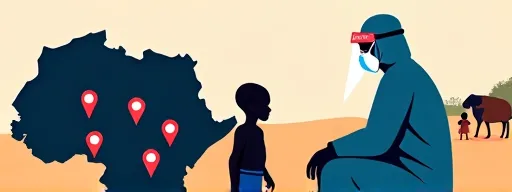
The Ebola outbreak gripping eastern Democratic Republic of the Congo is expanding faster than official figures suggest, with new cases emerging in previously unaffected health zones almost every day. Dr Olivier le Polain, the World Health Organization’s head of epidemiology and analytics for response, speaking from the epicentre in Ituri province, warned that the true magnitude of the crisis is “much bigger than what is being detected,” citing the high mobility of the population in this volatile border region. As of Thursday, the Congolese health ministry had recorded 676 confirmed infections and 136 deaths, but the daily identification of cases in fresh localities indicates that the virus is outpacing containment efforts.
The outbreak is driven by the rare Bundibugyo species of the Ebola virus, for which no licensed vaccine or treatment exists. This distinguishes it from the more common Zaire strain that fuelled the devastating 2014–2016 West African epidemic and for which effective medical countermeasures have since been developed. The majority of cases remain concentrated in Ituri, yet the pathogen has now been detected across 34 health zones spanning three eastern provinces: Ituri, North Kivu and South Kivu. Viewed from Geneva, the absence of a ready-made pharmaceutical shield places a heavier burden on traditional public health tools — contact tracing, isolation and safe burials — in a region scarred by armed conflict and deep mistrust of authorities.
UN agencies in New York are increasingly alarmed by the prospect of a sharp rise in child victims. The same population movements that complicate tracking — traders, miners and displaced families criss-crossing porous borders — also expose the very young to infection in crowded markets and shared households. Health officials on the ground note that many early cases were adults, but the epidemiological pattern is shifting. Without a vaccine, children remain entirely unprotected, and the case fatality rate for the Bundibugyo strain, while lower than for Zaire, still hovers around 20 per cent.
The WHO has pledged continued support to the Congolese government, but le Polain stressed that “much more needs to be done” to bring the outbreak under control. Contact tracing must be intensified, and additional isolation units are urgently required to prevent health facilities from becoming amplifiers of transmission. Analysts in London caution that the international response, still fatigued by the Covid-19 pandemic and competing humanitarian crises, has been slow to mobilise the funding and specialised personnel needed. As the virus pushes into new areas, the window to prevent a protracted health emergency is narrowing.
How the same story is told elsewhere.
The WHO and UNICEF report that the Ebola outbreak in DRC is still spreading, with 676 confirmed cases and 136 deaths. Emphasis is on the lack of vaccine for the Bundibugyo strain and geographic expansion. Tone is neutral and factual.
UN agencies warn that the Ebola outbreak in eastern DRC is spreading, with a worrying increase in child infections expected. The focus is on the high population mobility and new health zones affected daily. The tone is concerned but factual.
WHO warns the Ebola outbreak is spreading uncontrolled, with 676 cases and 136 deaths. Language is alarming: 'still expanding', 'devastating impact'. Emphasis on underestimation of real scale.
This story appeared in
7 sources · 4 languages · 24h window