Easter Truce in Ukraine Marred by Ceasefire Violations, But Prisoner Exchange Proceeds
Russia and Ukraine accused each other of thousands of violations within hours of the Orthodox Easter ceasefire, while a parallel swap of 350 prisoners offered a rare signal of cooperation.
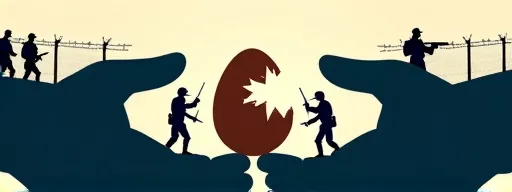
The Orthodox Easter truce brokered between Moscow and Kyiv collapsed within minutes of taking effect on Saturday afternoon, underscoring the profound distrust that pervades the conflict more than four years after Russia’s full-scale invasion. Air raid sirens wailed in the north-eastern city of Kharkiv just 38 minutes after the pause was supposed to begin, a harbinger of the chaotic 30-hour period that followed. By Easter Sunday morning, both sides had registered more than 2,000 violations along the front line, though notably no long-range missile or drone strikes of the kind that routinely target Ukrainian infrastructure were reported. “Easter should be a time of safety, a time of peace,” Ukraine’s President Volodymyr Zelensky wrote on social media as the truce began, a sentiment swiftly buried under renewed gunfire.
From Kyiv, the picture was one of unremitting Russian aggression. Ukraine’s general staff published a detailed tally: 2,299 ceasefire violations between Saturday afternoon and Sunday morning, including 28 enemy assault actions, 479 shelling incidents, 747 attacks by combat drones and 1,045 by FPV kamikaze drones. Strikes by heavier weaponry—missiles, guided aerial bombs and Shahed-type loitering munitions—were conspicuously absent, suggesting a degree of restraint on the most destructive systems. Viewed from Moscow, however, the narrative was inverted. The Russian defence ministry claimed Ukrainian forces perpetrated 1,971 violations, among them three attempted counter-attacks in the Dnipropetrovsk region. The symmetry of the accusations revealed less about the facts on the ground than about the entrenched propaganda war that runs parallel to the fighting.
Amid the recriminations, a significant humanitarian gesture moved forward. On Saturday, Russia announced the exchange of 350 prisoners of war—175 from each side—mediated by the United Arab Emirates. In addition, the two parties swapped the remains of their fallen, with Kyiv returning 41 Russian bodies in exchange for 1,000 Ukrainian soldiers’ remains, while also handing over seven civilians from the partly occupied Kursk region. That this delicate operation proceeded even as the ground-level ceasefire lay in tatters suggests that some pragmatic channels, often nurtured by Gulf intermediaries, retain a fragile functionality.
The episode illuminates the yawning gap between symbolic peace overtures and the reality of a brutal, entrenched war. Zelensky, while vowing a “symmetrical” response to violations, held out the hope that the truce could be extended beyond the Easter period to create space for broader peace talks. Western analysts, however, note that the immediate and systematic violations by both sides—each recorded in minute operational detail—demonstrate that without robust monitoring and a shared political will, temporary cessations of fire are little more than battlefield breathing spells. For civilians across Ukraine, who spent the holy weekend in shelters rather than churches, the message was captured in a single, weary refrain from Kharkiv: “We need real peace.”
This story appeared in
10 sources · 4 languages · 24h window