Deepest Whale Graveyard Found in Indian Ocean, Dating Back 5 Million Years
Chinese-led expedition uncovers vast fossil site in Diamantina Fracture Zone, offering unprecedented window into abyssal ecosystems and cetacean evolution.
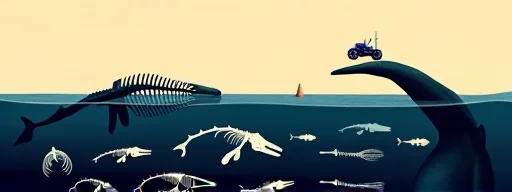
In the remote depths of the southeastern Indian Ocean, an international scientific expedition has uncovered what is being described as the largest and deepest whale graveyard on Earth. Stretching across the Diamantina Fracture Zone, a tectonic scar some 1,200 kilometres long, the site lies at depths reaching 7,000 metres and contains more than 470 individual fossil locations alongside five still-active whale carcasses. The findings, published in the journal Nature, mark the first time researchers have identified a single abyssal region that has served as a cetacean death assemblage for at least 5.3 million years.
Viewed from Beijing, the discovery underscores China’s rapidly advancing deep-sea exploration capabilities. The expedition was led by the Chinese Academy of Sciences’ Institute of Deep-Sea Science and Engineering in Sanya, Hainan, which deployed remotely operated vehicles to survey the fracture zone. Chinese researchers describe the site as a “necropolis of whales” that fundamentally reshapes scientific understanding of the limits and resilience of life in the ocean’s hadal depths. The presence of both fossilised remains and modern carcasses, they argue, provides an unbroken record of whale-fall ecosystems—communities of organisms that colonise sunken cetacean skeletons—across geological time.
Italian palaeontologists from the University of Pisa, who collaborated on the study, emphasise the evolutionary significance of the find. The fossil specimens, some dating to the Miocene-Pliocene boundary, offer a rare glimpse into ancient cetacean species and the deep-sea fauna that depended on them. For researchers in Rome, the graveyard is not merely a collection of bones but a continuous archive of abyssal adaptation, revealing how nutrient pulses from dead whales have sustained isolated ecosystems over millions of years. Meanwhile, Earth Sciences New Zealand contributed regional tectonic expertise, helping to explain why this particular fracture zone became a persistent trap for sinking carcasses—a convergence of currents and geological features that turned the seafloor into a natural repository.
The discovery carries implications far beyond marine biology. Analysts in London note that the find highlights the vast, unexplored territories still hidden beneath the ocean surface, and with them, the geopolitical dimension of deep-sea research. As nations invest in submersible technology and seafloor mapping, sites like the Diamantina whale graveyard become both scientific treasures and symbols of strategic reach. The international collaboration itself—Chinese, Italian, and New Zealand scientists working together—reflects a pragmatic recognition that the deep ocean transcends national boundaries, even as competition for its resources intensifies.
Looking ahead, the research team plans to conduct further surveys and genetic analyses of the fossil material. The graveyard may yield insights into how whale-fall communities have responded to past climatic shifts, offering a deep-time perspective on the resilience of abyssal life. For a global readership accustomed to news of ecological decline, the site stands as a reminder that the planet still holds extraordinary secrets—and that understanding them requires both technological ambition and cross-border scientific cooperation.
How the same story is told elsewhere.
An international team, including paleontologists from the University of Pisa, has discovered the largest and deepest whale graveyard in the Indian Ocean's Diamantina Fracture Zone. The site holds both recent carcasses and cetacean fossils dating back more than 5 million years, providing an unprecedented window into abyssal ecosystems. The study, published in Nature, marks a major advance in understanding deep-sea life.
A Chinese deep-sea research team has uncovered Earth's deepest and most extensive whale fossil site, revealing that whales have been coming to this Indian Ocean location to die for over 5 million years. The discovery, published in Nature, highlights China's growing capabilities in deep-sea exploration and provides a unique window into long-term marine ecosystem evolution.
A discovery that has left scientists astonished: an enormous whale graveyard has been found deep in the Indian Ocean, containing fossils up to 5.3 million years old. The site stretches for 1,200 kilometers and lies up to 7,000 meters deep, showing that the oceans still hold secrets capable of surprising even the experts.
This story appeared in
6 sources · 3 languages · 24h window