China Denies Xi Raised Voice on Japan at Trump Summit
Beijing dismisses reports that President Xi grew agitated and loudly condemned Japan’s rearmament during his May summit with Donald Trump, insisting descriptions of his conduct are inaccurate.
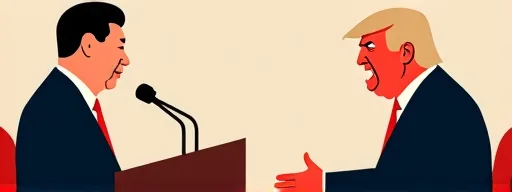
Chinese Foreign Ministry spokesperson Mao Ning on Tuesday flatly denied press accounts that President Xi Jinping lost his composure and delivered a heated tirade about Japan during his May summit with Donald Trump in Beijing. “The content of the reports you mentioned does not correspond with the information available to the Chinese side,” Mao told journalists, dismissing descriptions of Xi as visibly agitated.
The denial was prompted by a detailed Financial Times report, subsequently corroborated by Japan’s Jiji Press and carried by outlets across the Middle East and Europe, which depicted an unexpected flashpoint at the 14–15 May meeting. Seven individuals familiar with the discussions said that Xi, without forewarning, launched a sharp attack on Japanese Prime Minister Sanae Takaichi over what he described as the “remilitarisation” of Japan. The Chinese leader’s voice grew louder and his demeanour more irritated, surprising the US delegation because Japan had scarcely featured in pre‑summit preparatory talks. Multiple sources described this as the most tense moment of the two‑day encounter.
According to people with knowledge of both US–Japan and US–China relations, Trump responded by defending Takaichi, arguing that Tokyo was compelled to adopt a more assertive defence posture in the face of an escalating North Korean missile threat. Immediately after the summit, the American president called Takaichi from Air Force One, a gesture interpreted in Tokyo as reassurance that Washington would not countenance Beijing’s pressure. Viewed from Japan, the episode revealed the depth of Chinese unease over any revision of Tokyo’s pacifist constitution and its rising defence expenditures, while analysts in Washington saw it as a rare glimpse of Xi’s emotional engagement when core security interests are at stake.
The chasm between Beijing’s categorical denial and the consistent detail emerging from Western and Japanese sources highlights a now‑familiar diplomatic friction: Chinese official statements often seek to erase from the record exchanges that leak through other capitals. For the wider region, the incident is unlikely to be isolated. China’s leadership has grown increasingly vocal in warning against what it terms the revival of Japanese militarism, a theme that Beijing is weaving more firmly into its broader narrative about a US‑led “encirclement” strategy. Whether the summit outburst was a calculated signal or a genuine loss of temper, its aftershocks will be measured in how Tokyo and Washington calibrate their next joint defence declarations—and how firmly Beijing pushes back.
This story appeared in
8 sources · 4 languages · 24h window