Bolivia’s Crisis Deepens as Clashes Erupt in La Paz and US Threatens Visa Sanctions
Protesters demanding President Rodrigo Paz’s resignation clashed with police in the capital, while fuel shortages cripple transport networks and Washington warns of visa revocations for violent acts.
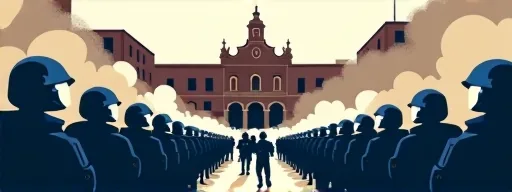
Protests demanding the resignation of Bolivian President Rodrigo Paz Pereira escalated sharply on Wednesday as thousands of miners, farmers, transport workers and teachers attempted to march from the highland city of El Alto to the Plaza Murillo in central La Paz, the seat of government. Riot police blocked their advance with tear gas, while protesters responded with stones, low-power dynamite charges and barricades of burning rubbish containers. At least five people were detained, according to local media, marking the most violent confrontation since the mobilisations began in early May.
The movement, orchestrated by the Bolivian Workers’ Centre (COB), has maintained road blockades and hunger strikes for over five weeks, demanding the departure of the centre-right president who took office in November promising to resolve the country’s worst economic crisis in decades. Instead, his market-oriented reforms have drawn fierce union opposition, while his government recently secured congressional approval of a law permitting the military to support police operations. Paz is now weighing a decree of a state of exception that would deploy the armed forces more widely, a step that analysts in London view with concern given Bolivia’s history of military interference in politics.
The social unrest has been compounded by a severe fuel shortage across the country. Weeks of road closures have paralysed supply chains, leaving thousands of vehicles stranded in kilometre-long queues outside petrol stations in La Paz and El Alto. Drivers have resorted to sleeping in their cars and, in one protest this week, blocked the highway linking the two cities with burning tyres. The shortages have deepened public anger, transforming what began as a political crisis into a threat to basic economic functioning.
Viewed from Washington, the instability is prompting direct warnings. On Wednesday, the US embassy in La Paz announced that participation in “violent acts” could result in the revocation or denial of American visas, a blunt signal that the Biden administration is prepared to apply pressure on those fuelling disorder. As Paz weighs military intervention, the risk of a prolonged confrontation grows. A crackdown might temporarily restore order, but without addressing the underlying economic grievances, analysts warn, it could radicalise the opposition and further isolate the president internationally.
How the same story is told elsewhere.
A massive mobilization of peasants, miners, and union workers demands the resignation of President Paz Pereira. Police crack down on protests with tear gas and targeted arrests of grassroots leaders. Tension in the capital is at its highest since last November, with Plaza Murillo sealed off by security forces.
Fresh clashes between protesters and police in La Paz, as the wave of protests against President Paz continues. The head of state, who took office in November, promised to solve the deep economic crisis. So far the demonstrations have led to storming of government buildings and repeated riot police deployments.
This story appeared in
7 sources · 4 languages · 24h window