Bolivia Enacts State of Exception Law to Clear Road Blockades
Congress passes legislation enabling military deployment after month-long protests paralyse the Andean nation, sparking clashes that wounded police and deepened shortages.
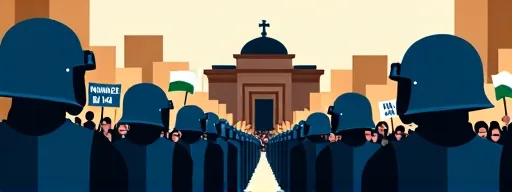
The Bolivian Congress approved a new state of exception law early on Sunday, granting President Rodrigo Paz sweeping powers to deploy the military to dismantle road blockades that have crippled the country for over a month. After a marathon session that extended into the night, the Chamber of Deputies voted by more than a two-thirds majority to send the bill to the executive, following earlier Senate approval. The law sets out the legal framework for extraordinary measures against internal conflicts and threats to public order, explicitly allowing the armed forces to clear highways obstructed by protesters demanding Paz’s resignation.
The vote came as tensions mounted over a previous day’s operation in the eastern region of Santa Cruz, where a joint police and army unit attempting to open an alternative route near San Julián was met with armed resistance. At least two officers were wounded by gunfire, according to local reports, while protesters hurled stones and burned tyres to halt the advance. The confrontation, captured by local television, underscores the volatility of a crisis that has seen some 100 blockades choke transport links, precipitating acute shortages of food, fuel and medicines in major cities including La Paz and El Alto. The Santa Cruz region, Bolivia’s agricultural powerhouse, has been a strategic flashpoint, as demonstrators seek to disrupt supply chains linking the fertile lowlands to the western highlands.
The political stand-off, rooted in discontent over economic management and the rule of the centre-right Paz, has drawn increasing international concern. Viewed from Washington, where the administration has offered steady backing for the Bolivian president, the crisis exposes the limits of that support to quell deeply rooted anger. Analysts in the region warn that the newly sanctioned use of the military, while ostensibly aimed at restoring mobility, risks inflaming a public already sceptical of state security forces. The legislation also permits the restriction of assembly and movement rights during emergency periods, a measure that critics argue could escalate confrontations rather than defuse them.
Looking ahead, Paz is expected to declare a formal state of exception within days, a step that would formally hand the armed forces a lead role in restoring order. Yet with no end to the protests in sight and the spectre of further violence in the countryside, the government faces a precarious balancing act. The international community will be watching closely to see whether the military’s involvement brings a fragile calm or plunges the Andean nation deeper into discord.
How the same story is told elsewhere.
Continental European media report on clashes between police and protesters demanding the resignation of center-right President Rodrigo Paz, highlighting a road blockade causing severe food and medicine shortages. Bolivia's Congress passed a law allowing military deployment to put down the protests, as security forces move to clear the barricades. The coverage keeps a critical distance, noting the US backing of the administration.
Latin American media foreground the Bolivian Congress's approval of a state-of-emergency law, passed after weeks of protests and road blockades that are deepening the political and social crisis. The reports also note clashes causing injuries among security forces, framing the center-right president's push to use the military to clear highways and restore supplies. The tone is pragmatic and underscores the urgency of ending the nation's paralysis.
The Iranian outlet portrays violent clashes between anti-riot police and protesters at a road blockade in Bolivia, with tear gas, stones, and burning tires, as a month-old movement demanding the center-right president's resignation paralyses the country. Without expressly mentioning US support, the report conveys alarm and indignation at the security forces' crackdown. The focus stays on the immediate confrontations and the underlying social unrest.
This story appeared in
11 sources · 2 languages · 24h window