Belfast Riots Lay Bare Tensions Over Migration After Brutal Knife Attack
Weeks of warning about far-right target lists went unheeded before a Sudanese asylum seeker's attack ignited anti-immigrant violence across Northern Ireland.
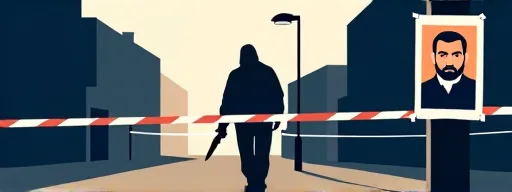
The quiet of a Monday evening in Belfast was shattered on 8 June when Hadi Alodid, a 30-year-old Sudanese refugee, allegedly attempted to behead Stephen Ogilvie, a local healthcare worker, with a kitchen knife. Graphic footage of the attack, which cost Ogilvie an eye, spread rapidly across social media, and within hours the city erupted. By Tuesday, masked groups were rampaging through neighbourhoods with significant immigrant populations, hurling petrol bombs at police and torching vehicles and homes. The Northern Ireland Fire and Rescue Service responded to dozens of blazes, and authorities deployed water cannon in a bid to restore order. Viewed from Dublin, the scenes carried grim echoes of the sectarian disorders that scarred the region for decades.
Alodid’s profile sharpened the political edge of the violence. French and Italian press reports noted that he had travelled from Sudan to Paris in 2023 before reaching Belfast via Dublin, and was granted asylum in the UK through an accelerated process that required no interview and gave him leave to remain until 2028. Le Figaro added that Alodid hailed from a politically connected family in Karima and had served as a police officer in Khartoum—details that fuelled accusations of security failures. In Belfast, where memories of the Troubles still shape communal trust, the disclosure that an individual with potential links to state structures had slipped through vetting procedures proved incendiary.
Yet, even before the knife struck, warning signs were flashing. Swedish and British outlets have confirmed that an activist group, the Accountability Project Northern Ireland, had been alerting police since November 2025 to a so-called ‘attack list’ of addresses associated with ethnic minorities, circulating in far-right online forums. The list, which included many of the residential buildings later hit by firebombs, was formally passed to authorities in January 2026 but triggered no visible preventive action. Residents on Lendrick Street, an area of east Belfast that saw some of the worst destruction, described their terror at seeing neighbours’ homes burn while police appeared unable to stop the mobs. ‘I’m scared when I’m in the city, I look over my shoulder,’ one resident told a Swedish television crew.
Analysts in London point to the rapid weaponisation of the attack by a nexus of far-right influencers and international figures. German public radio reported on how prominent accounts, including that of Elon Musk, amplified the story to frame it as an indictment of migration policy, echoing earlier ‘White lives matter’ protests that had swept British cities following the killing of a white teenager. The frenzy online fed directly into the street violence, with chants of ‘send them back’ and attacks on shops owned by immigrants. Meanwhile, Newsweek, a US outlet, accused mainstream media of omitting the attacker’s origin for fear of stoking racism, a self-censorship that some argue only deepens public mistrust.
By the weekend, a fragile calm had returned to Belfast, but the city was hollowed out. Public transport remained suspended by mid-afternoon, schools closed early, and thousands of immigrants, like Sudanese refugee Twasul Mohammed, kept their children home, paralysed by fear. Valôr Econômico quoted Mohammed as saying women and children were ‘terrified and in shock’. For a region still navigating post-conflict reconciliation, the riots have exposed raw nerves over identity, integration, and the state’s ability to manage borders and protect all communities. As the UK government faces calls to overhaul asylum procedures and combat extremist militancy, the question is whether the peace that held for nearly three decades can withstand the new fault lines being drawn on Belfast’s streets.
How the same story is told elsewhere.
A brutal knife attack by a Sudanese asylum seeker triggered anti-immigrant riots in Belfast. Right-wing influencers and social media platforms amplified the violence, while police had prior warnings about target lists of immigrant addresses. The city is gripped by fear and a heated debate over racism and online manipulation.
Violence against immigrants is spreading fear through Belfast. Following a knife attack for which a Sudanese man was charged with attempted murder, masked groups targeted homes and businesses of those perceived as immigrants. Minority ethnic communities, including Sudanese refugees, say women and children are terrified and in shock, afraid to leave their homes.
Belfast is burning because a Sudanese 'asylum seeker' attempted to behead a local man, blinding him. The media refuses to tell the truth, covering up the immigration connection. The people rose up in riots against failed asylum policies and media dishonesty.
The Belfast riots, sparked by a Sudanese asylum seeker's attack, quickly entered Australia's political debate. A senator argued it shows Australia must scrutinize more carefully who is allowed in. The event is framed as a test for Australia's migration model, underscoring the relevance of distant unrest to domestic policy.
This story appeared in
9 sources · 6 languages · 24h window