China Launches ‘Special Operation’ in Waters East of Taiwan
Beijing responds to Japan-Philippines border talks with a show of force, as Taipei boosts Pacific diplomacy and bans island officials from mainland forum.
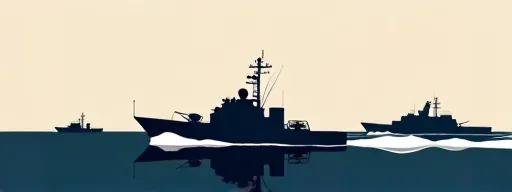
China has mounted what it describes as a “special law enforcement operation” in the waters east of Taiwan, dispatching a flotilla of maritime police and transport ministry vessels in an assertive response to bilateral talks between Japan and the Philippines over their maritime boundary. The deployment, organised by Beijing’s Transport Ministry and involving the maritime safety authorities of Fujian and Guangdong provinces as well as East China Sea rescue and navigation support units, began on 6 June and was intended to “fully exercise administrative jurisdiction,” strengthen deep-water patrol capabilities and safeguard national rights, according to the official Xinhua news agency. Taiwan’s Coast Guard Administration reacted swiftly, sending five patrol ships to monitor the Chinese vessels, four of which were tracked departing Xiamen. Taipei maintained that no Chinese ships had entered its territorial waters and declared the operation a violation of international law.
The manoeuvre is Beijing’s direct rebuttal to Tokyo and Manila’s decision last month to open formal negotiations on delimiting their exclusive economic zones and continental shelf. China, which claims Taiwan as part of its sovereign territory, has denounced the talks as illegal and an infringement of its territorial integrity and maritime rights. Observers in Moscow and New Delhi note that the operation mirrors Beijing’s broader pattern of using law enforcement proxies to assert jurisdiction in contested waters without triggering a military confrontation. Chinese state media explicitly framed the exercise as a necessary countermeasure to “unilateral” actions that undermine China’s position, while also stressing that it aims to ensure navigational safety and combat crime.
Against this backdrop of maritime friction, Taiwan’s government sought to solidify its global standing on other fronts. Vice President Hsiao Bi-khim prepared for a visit to Palau, part of a campaign to deepen cooperation with Pacific island nations in public health, agriculture and fisheries technology. Meanwhile, the Mainland Affairs Council extended a ban on government officials attending the upcoming China-run Straits Forum in Xiamen, with a spokesperson describing the forum as a “united front platform” designed to erode Taiwan’s political autonomy.
In a surprising whisper of goodwill amid the acrimony, two red pandas arrived at Taipei Zoo from China, the first animal exchange in more than a decade. Taipei dispatched a pair of gibbons to Shanghai in return, signalling that select channels of non-political engagement persist even as strategic tensions heighten. Analysts in London and Washington saw the operation east of Taiwan as a calibrated escalation – Beijing’s way of redrawing the boundaries of practical control while probing the resolve of Tokyo, Manila and Taipei in a region where sovereignty claims overlap and the potential for miscalculation remains high.
How the same story is told elsewhere.
China conducted a special maritime operation east of Taiwan, justifying it as a necessary enforcement step after Japan and the Philippines began talks on maritime boundary delimitation. Taiwan's coast guard responded by dispatching its own vessels, condemning the operation as a violation of international law. The incident highlights ongoing tensions over Taiwan's status and Beijing's determination to assert control over the surrounding waters.
The Chinese special operation in waters east of Taiwan is a necessary response to the illegal and unilateral talks between Japan and the Philippines, which infringe China's territorial sovereignty and maritime rights. Taiwanese authorities dispatched patrol vessels in reaction, but Beijing portrays the action as a legitimate exercise of jurisdiction to ensure shipping safety and public order. The move reaffirms China's firm stance against external claims.
China launched a provocative operation off Taiwan's eastern coast, using the talks between Tokyo and Manila as a pretext to pressure the island democracy. Taiwan's coast guard immediately dispatched vessels to monitor and protest the intrusion, which Taipei condemned as a clear violation of international law. The incident underscores Beijing's escalating attempts to unilaterally redraw the regional map.
This story appeared in
19 sources · 9 languages · 24h window