Ambitious Franco-German Fighter Jet Project Collapses, Exposing Europe’s Defence Divisions
Cancellation of the FCAS programme, once a symbol of European strategic autonomy, exposes deep industrial rivalries and political mistrust between France and Germany.
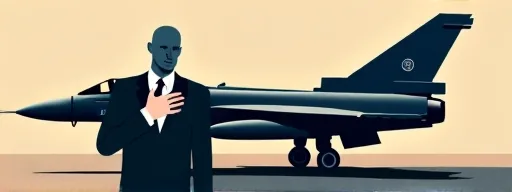
The death of Europe’s most ambitious defence project was announced not with a coordinated statement but through a leak from Berlin that caught Paris off guard. On Monday, news emerged that German Chancellor Friedrich Merz had advised President Emmanuel Macron to abandon the Future Combat Air System (FCAS), a next-generation fighter jet meant to bind the continent’s aerospace industries together. German Defence Minister Boris Pistorius confessed that the failure “hurts me deeply,” while in Madrid, Defence Minister Margarita Robles called it “a failure without any doubt,” blaming defence contractors for putting economic interests ahead of European security. The unscripted, asymmetrical announcement laid bare the mistrust that had come to define the endeavour.
Conceived in 2017 as the industrial centrepiece of Macron’s Sorbonne vision for a sovereign Europe, FCAS was to replace the Eurofighter and Rafale with a sixth-generation system of manned jets, loyal wingman drones, and a combat cloud, reducing dependence on American technology. But from the outset, Dassault and Airbus Defence clashed over operational leadership, intellectual property, and work-sharing. France insisted on Dassault’s primacy, while Germany demanded a more equal partnership. Years of ministerial summits failed to bridge the gap, and the project became a slow-motion collision of national industrial cultures.
Viewed from Paris, the collapse is a bitter repudiation of Macron’s strategic autonomy agenda; the Élysée blamed Berlin for refusing to push industry harder. In Berlin, however, many officials saw the cancellation as overdue—a pragmatic recognition that a common design was untenable when France required a carrier-capable jet and Germany did not. Spanish participation added complexity, but Madrid’s voice was largely sidelined. Commentators in Zurich noted that militarily the loss is not catastrophic, as existing airframes can serve for decades, but politically it is a severe blow to Franco-German trust and EU defence integration.
The failure reinforces the very dependency FCAS was meant to break. An Israeli outlet put the wasted cost at $116 billion, framing the episode as a battle Europe lost against itself. European analysts are divided: some argue the continent needs not grand prestige projects but nimble coalitions of the willing, while others warn that the vacuum will be filled by American contractors or the British-led Tempest programme. The episode leaves a haunting question: if Paris and Berlin cannot build a fighter jet together, what hope is there for the common defence Europe so often proclaims?
How the same story is told elsewhere.
The cancellation of the FCAS fighter is a bitter defeat for European defence and the Franco-German axis. Industrial jealousies and political failure to assert control dragged the project into failure. Europe is now forced to rethink its strategic autonomy without clinging to prestige projects.
Europe lost its battle for a sixth-generation fighter: the 116-billion-dollar FCAS programme ended up in the bin. Paris and Berlin could not bridge the industrial rifts, proving that the dream of strategic autonomy remains remote. The failure leaves the continent still dependent on the United States for air superiority.
The collapse of the European fighter project highlights the bloc's chronic inability to pool defence resources. Despite solemn declarations, national interests and disputes between industrial giants have derailed yet another flagship initiative. The result is a Europe that remains wedded to US systems for its own security.
The much-vaunted European joint fighter has crashed, laying bare the hypocrisy of Macron's strategic autonomy. The bitter quarrels between Paris and Berlin confirm that the EU remains a collection of squabbling states, unable to defend itself without the US umbrella. Moscow can watch with satisfaction as its rival grows ever more fragmented.
This story appeared in
8 sources · 5 languages · 24h window