After 100 Days of Iran War, Stalemate Exposes US Vulnerability
A fragile ceasefire masks a costly deadlock: thousands dead, millions displaced, and fuel prices rising in 146 nations. Diplomatic efforts founder as Tehran proves resilient, challenging Washington’s aura of invincibility.
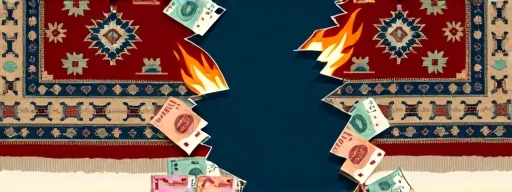
The war between the United States, Israel and Iran reaches its 100th day on Sunday with the conflict deadlocked despite Washington’s repeated declarations of victory. Secretary of State Marco Rubio pronounced Operation Epic Fury over on 5 May and again on 3 June, insisting the campaign had “degraded” Iran’s conventional military and missile arsenal. Yet the numbers tell a more ambiguous story: in the first hundred days there have been only 39 days of active hostilities against 61 of ceasefire, but the shooting has not stopped entirely and a lasting peace remains elusive. Viewed from Tehran, the survival of the Islamic Republic despite the killing of its supreme leader and top commanders, alongside the destruction of much of its military infrastructure, signals resilience; from Washington, the stalemate is an uncomfortable reminder of the limits of overwhelming force.
The economic repercussions have been severe and global in reach. The US naval blockade of Iranian ports, now in its 56th day, has turned the Strait of Hormuz into a flashpoint, disrupting oil and gas shipments and triggering energy market volatility. According to data compiled by Indonesian media, fuel prices have surged in at least 146 countries, compounding the pain of a conflict that has already killed more than 7,000 people and displaced millions. Independent tallies vary — one website puts fatalities at around 2,211 with over 22,000 injured — but the fog of war obscures precise numbers as the fighting spills into Lebanon and across the Gulf.
Diplomacy remains fitful. A fragile ceasefire has held for weeks, yet talks between Washington and Tehran have repeatedly stalled. US president Donald Trump said on Friday that Iran’s leadership was “too proud” to strike a deal but would ultimately have to concede. “They’re strong, they’re proud, there are things they never thought they’d be doing that they’re going to have to do,” he told reporters, adding that Tehran had enjoyed “47 years of getting away with whatever they wanted.” Analysts in London note that such blunt conditioning may harden Iranian resolve even as the blockade strangles its economy.
The 100-day milestone has exposed strategic vulnerabilities that allies and adversaries are studying. The world’s most powerful military and its Israeli ally have failed to crush a state that lost its supreme leader and much of its arsenal, instead facing retaliatory strikes and a potential quagmire. Viewed from New Delhi and Jakarta, the war has demonstrated the limits of overwhelming force, while rising fuel prices underscore how tightly global security is coupled to the Strait of Hormuz. No clear victor has emerged, but early winners and losers have upended pre-war predictions: Iran’s endurance has dented the aura of American invincibility, and the nuclear question remains unanswered.
How the same story is told elsewhere.
The war has turned into a costly stalemate, with over 7,000 dead, mass displacement, and severe economic disruption due to the near-closure of the Strait of Hormuz. Iran has proven far more resilient than expected, nuclear talks are stalled, and mounting public disapproval is increasing political pressure on Washington. The conflict looks like a miscalculation with no end in sight.
While the administration touts the success of Operation Epic Fury in degrading Iran's conventional forces, the reality is a war that exposed American vulnerabilities and turned into a protracted contest. More days have seen ceasefire than active combat, yet global costs keep rising and the nuclear threat remains unresolved. The conflict upends pre-war predictions, producing a messy stalemate that adversaries study closely.
The military operations have turned the Strait of Hormuz into a critical flashpoint, severely disrupting oil and gas shipments and triggering unprecedented volatility in global energy markets. Prolonged instability threatens economic security far beyond the Gulf, with rising fuel prices and trade uncertainty hitting many nations. The focus rests squarely on the cascading economic fallout, not on battlefield developments.
President Trump attributes the lack of a peace deal to Iran's strength and pride, asserting that Tehran will ultimately have no choice but to concede. The narrative casts the impasse as a matter of Iranian stubbornness that must eventually yield to pragmatic necessity. The conflict's fate hangs on a psychological standoff, with Washington waiting patiently for Tehran to bend.
This story appeared in
6 sources · 3 languages · 24h window