Weapons, Disengagement and the Struggle to Make Schools Safe Havens
From Quebec's weapons seizures to student assaults in Argentina, schools worldwide confront a multifaceted crisis of safety, engagement, and mental wellbeing.
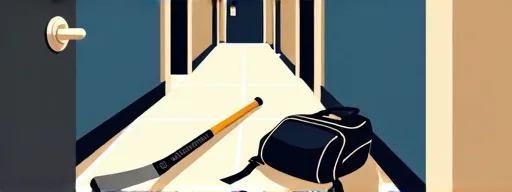
The discovery of hundreds of weapons—knives, imitation firearms, tasers, even machetes—in Quebec's schools over recent years paints a stark picture of the challenges facing educational institutions. A Le Devoir investigation uncovered partial but alarming data, including an episode in Abitibi-Témiscamingue where a student brandished a firecracker gun in a schoolyard and another produced a razor-sharp 3D-printed plastic knife. While school boards insist such incidents are rare and declining, the unease is palpable.
Yet the malaise is not confined to North America. In Argentina, the recent assault of a teacher by a student in Tandil shocked the nation, but as analysts in Buenos Aires note, it was not an isolated act. Classrooms have become increasingly hostile, driven by a combustible mix of social violence, the erosion of adult authority, and the hyper-digital immersion of young people. Fragile community ties and a deficit of care networks leave schools absorbing conflicts that originate far beyond their gates.
Viewed from Dhaka, the crisis takes a different form. In Bangladesh, educators grapple not with weapons but with a creeping disengagement that has made school attendance optional for many. Growing dependence on private tutors and coaching centres is straining family finances, while causes such as social instability, moral decay, and the spread of drug culture chip away at the institution’s relevance. The school, once the heart of a child’s life, has become a place to flee rather than embrace.
The boundaries blur further when teenage violence spills into public spaces. In Montreal, school staff now routinely field reports of confrontations at fast-food outlets or shopping centres. “Madame, there was beef at McDo,” is a phrase administrators recognise as a warning that the incident will soon walk through their doors. As Priscilla Côté of the Marguerite-Bourgeoys school service centre puts it, “We are a living environment; if it enters the school, we must deal with it.” Parents, often caught off guard, find that the schoolyard has expanded to the entire neighbourhood.
Faced with such pressures, some voices call for a reframing of the student experience. Analysts in Dubai point to the psychological weight of perceived pressure, arguing that the stories we tell young people about difficulty shape their reality. The challenge, they suggest, is to replace a narrative of impossibility with one of growth. Echoing that sentiment, the late American entrepreneur Jim Rohn’s maxim—“Don’t wish it were easier. Wish you were better”—encourages building resilience rather than waiting for headwinds to subside. From Montreal to Tandil, Dhaka to Dubai, the task confronting educators is daunting. It demands a holistic reinvestment in the school as a sanctuary—physically, socially and psychologically—that confronts social toxins, rebuilds adult authority, and equips young people with inner resources to navigate a hostile world.
How the same story is told elsewhere.
In Quebec, police have seized hundreds of weapons in schools, mostly knives but also stun guns, brass knuckles and machetes. The phenomenon is alarming and spills beyond school gates, with violent incidents in public spaces drawing in school communities. Schools are taking action yet remain cautious in public statements, insisting such cases remain rare and declining.
The attack on a teacher in Tandil shocks and alarms because it is not an isolated case but a sign that classrooms across the country have become hostile territory. The roots lie in social violence, weakened bonds, digital overexposure and the erosion of adult authority. The mistake would be to believe the conflict begins at the school desk rather than in society itself.
To deliver quality education, schools must become attractive hubs, yet students are increasingly disengaged and turning to private tuition. Blame is cast on social unrest, moral decay, drugs and the influence of pop culture. A quote of the day from Jim Rohn reminds young people to focus on personal improvement rather than wishing for easier circumstances.
Obsessively talking about school 'pressure' risks turning a perception into reality. Parents and educators should teach children to see challenges as opportunities for growth, by changing the narrative we offer them. Difficulty, after all, is often just a matter of the mind, and the story we tell shapes their world.
This story appeared in
5 sources · 4 languages · 24h window