US Doctor Discharged After Recovery from Rare Ebola Strain
Peter Stafford, infected while working in DR Congo, leaves Charité with family after experimental treatment as WHO launches $518m outbreak plan.
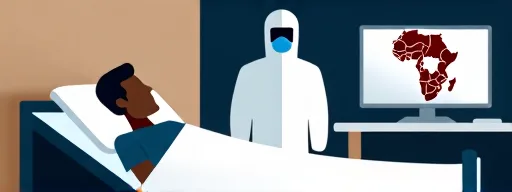
Peter Stafford, a 39-year-old American physician, was discharged from Berlin’s Charité hospital on Saturday after recovering from the Bundibugyo strain of Ebola, a rare variant for which no approved vaccine or treatment exists. The hospital confirmed that the virus had not been detected in his system since 30 May, and the local health authority lifted his quarantine at noon, in line with international protocols. His wife, also a doctor, and their four children, who had been quarantined as a precaution, were also released in good health. “Words cannot adequately express my gratitude,” Stafford said in a statement, adding that his thoughts remained with those in Congo without access to such care.
Stafford contracted the virus while working as a missionary surgeon for the US-based Christian group Serge in eastern Democratic Republic of Congo. He had operated on a patient later confirmed to have Ebola, days before the outbreak was officially declared on 15 May. Evacuated to Berlin on 20 May in grave condition, he was placed in the hospital’s specialised high-level isolation unit, where he received antiviral drugs and supportive measures, including experimental monoclonal antibodies during the first critical week. After 17 days of intensive care, he was deemed non-infectious and fit to return home.
The successful treatment was hailed in German media as a testament to Charité’s expertise as one of Europe’s premier isolation facilities. Viewed from Berlin, the case also underscored the importance of international medical cooperation, with the hospital working closely with the World Health Organization and the US Centers for Disease Control. Yet German reports noted the stark contrast with the ongoing crisis in central Africa, where health systems remain fragile. The Bundibugyo strain, first identified in Uganda in 2007, has historically caused smaller outbreaks but is poorly understood, making Stafford’s recovery all the more remarkable.
Meanwhile, the outbreak continues to grow. The WHO reports 452 confirmed cases and 82 deaths in DR Congo, with a further 19 cases and two deaths in Uganda, numbers that likely underestimate the true toll. In response, the agency has launched a $518 million strategic plan, drawing on lessons from previous epidemics to strengthen regional health security. Analysts in African capitals caution that the response is hampered by armed conflict in eastern Congo and persistent distrust of foreign medical teams, factors that also contributed to Stafford’s own infection, as he unknowingly operated on an Ebola patient.
Stafford’s discharge offers a glimmer of hope, but the experimental therapies that saved him—ranging from monoclonal antibodies to intensive physiological support—remain largely unavailable in the communities where the virus strikes most often. As international health officials stress the need for sustained investment in outbreak preparedness, his case serves as a reminder of the disparities in global health care and the enduring challenge of containing Ebola in its endemic heartlands.
How the same story is told elsewhere.
A triumph for Berlin's Charité hospital: after a two-week battle, the American doctor infected in Congo has been cured of Ebola and discharged, showcasing German medical excellence.
An American doctor on a humanitarian mission in Congo contracts Ebola, is evacuated to Berlin, and makes a full recovery. The story highlights the dedication of US volunteers abroad and relief at the happy ending.
A US surgeon working for a Christian missionary group in eastern DRC contracted Ebola before the outbreak was officially declared. After treatment in Berlin, he and his quarantined family are now well. The report situates the case within the broader battle against the epidemic in the region.
This story appeared in
9 sources · 3 languages · 24h window