US Disables Gambia-Flagged Ship in Gulf of Oman Blockade
A Hellfire missile strike on the M/V Lian Star exposes an uncompromising blockade policy that persists despite the ceasefire with Tehran.
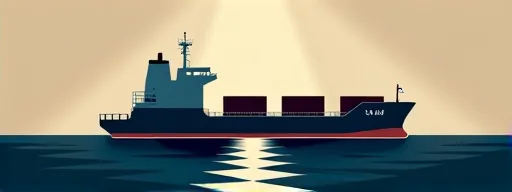
On 29 May, US Central Command confirmed that an American aircraft fired a Hellfire missile into the engine room of the M/V Lian Star, a Gambian-flagged bulk carrier, in the Gulf of Oman. The vessel had ignored more than twenty warnings while attempting to breach the US-imposed blockade on Iranian ports. The ship was disabled and left adrift, with no US personnel boarding it. This marks the fifth such interdiction since Washington established the maritime cordon in mid-April.
Viewed from Washington, the operation is calibrated enforcement of a blockade that aims to choke off Iran’s seaborne trade. Central Command says 116 other vessels have been redirected without force, while six have been stopped in total, one apparently allowed to pass. The blockade, unilaterally declared on 17 April, was triggered by Iran’s effective closure of the Strait of Hormuz—a reaction to escalating US military pressure. Despite a temporary ceasefire between the two nations, the naval quarantine remains in full effect.
In Tehran, the response has been predictably defiant. Iranian military headquarters asserted its “full authority” over the Strait of Hormuz, dismissing the US action as illegal under international maritime law. State-aligned media highlighted the economic fallout: global oil, gas and agricultural commodity prices have surged since the blockade began. Iranian commentators describe the US measures as collective punishment of neutral shipping, noting that many vessels previously transited under Iranian escort arrangements.
Regional and international observers view the episode as a dangerous new normal. Analysts in Gulf capitals note that each interception risks miscalculation in crowded shipping lanes, where Iranian Revolutionary Guard speedboats and US naval assets operate in proximity. From Moscow, attention has focused on the broader pattern: in early May, US forces disabled an Iranian-flagged tanker, the M/T Hasna, near the Strait. The cumulative disruption is forcing insurers to reassess war-risk premiums, and major shipping lines are increasingly steering clear of the zone, testing the resilience of global supply chains.
The Lian Star incident underscores the fragility of the ceasefire. While Trump administration officials emphasise that no lives have been lost in these actions, the deliberately non-lethal targeting of engine rooms suggests a desire to avoid escalation. Yet, with each warning ignored and each missile fired, the space for diplomatic off-ramps narrows. Unless a multilateral mechanism to guarantee freedom of navigation emerges, the Gulf of Oman risks becoming a permanent theatre of low-intensity maritime conflict.
How the same story is told elsewhere.
The United States has illegally blockaded Iranian ports and attacked a civilian vessel attempting to reach Iran, in defiance of international law. Iran's armed forces maintain full authority over the Strait of Hormuz and reject all foreign interference. The incident is yet another American provocation during a fragile ceasefire.
US forces disabled a Gambia-flagged cargo ship in the Gulf of Oman after it repeatedly ignored warnings while trying to breach the blockade on Iran. An American aircraft fired a Hellfire missile into the engine room, leaving the vessel adrift. The action raises to six the number of ships neutralised since the blockade began, with over a hundred more redirected.
This story appeared in
15 sources · 2 languages · 24h window