US and Iran Renew Strikes as Gulf States Brace for Spillover
Washington and Tehran exchange military blows despite negotiations to end the three-month war, with Kuwait intercepting incoming fire and the Strait of Hormuz still contested.
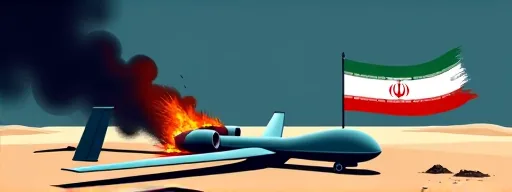
The weekend saw a fresh round of US-Iranian hostilities, as American forces struck radar and drone command sites on Iran’s Gulf coast following the downing of an MQ-1 Predator. In a now-familiar tit-for-tat, Tehran’s Revolutionary Guards claimed a retaliatory strike on the US airbase from which the attack was launched. Both sides described their actions as defensive, underscoring the deep mutual mistrust that has stymied efforts to turn the April ceasefire into a lasting settlement.
Viewed from Washington, the strikes were “measured and deliberate,” targeting assets that had threatened maritime traffic in the narrow channel through which a fifth of the world’s traded oil and gas once passed. The US Central Command linked the operation directly to the drone shootdown, insisting the aircraft was over international waters. Yet from Tehran, the narrative was starkly different: the Guards said the US had first hit a communications tower on Sirik Island, prompting their own “retaliatory” blow. The discrepancy exemplifies the asymmetric information war that runs parallel to the kinetic one, with each capital marshalling its own version of events to justify escalation.
The exchange did not occur in a vacuum. Neighbouring Kuwait reported intercepting drones and missiles, a stark reminder that the conflict rarely stays within bilateral bounds. Since the ceasefire took effect in early April, intermittent strikes have continued, with a near-identical pattern observed only last Thursday. Analysts in London note that the pattern of provocation, retaliation, and temporary calm has become a dangerous rhythm, driven partly by the Iranian desire to maintain leverage over the Strait of Hormuz while talks drag on. The waterway remains all but sealed, with Iran’s Revolutionary Guard corps dictating the terms of passage, squeezing global energy markets even as they signal willingness to negotiate.
Diplomats in European capitals and Gulf monarchies have redoubled efforts to break the impasse, but the core sticking points are well rehearsed. Tehran demands the lifting of sanctions and the release of tens of billions of dollars in oil revenues frozen in foreign banks; Washington, for its part, insists on a verifiable, permanent halt to Iranian drone and missile attacks before any sanction relief. US President Trump’s assertion that “Iran really wants to make a deal” offers a glimmer of optimism, but the gap between the two sides’ red lines remains wide. The weekend’s violence suggests that neither is ready to cede ground, and the region’s long-suffering populations must brace for further instability before any durable accord takes shape.
How the same story is told elsewhere.
A US strike on a communications tower on Iran's Sirik Island triggered an immediate and powerful retaliatory response by the Revolutionary Guard, which destroyed the American airbase used to launch the attack. Tehran warns that any further aggression will be met with a response of an entirely different scale and character, and that full responsibility for escalation lies squarely with Washington.
The United States carried out proportionate and necessary self-defense strikes on Iranian drone command infrastructure after an unprovoked attack downed an American MQ-1 drone over international waters. The US response eliminated air defenses and drone systems to prevent further threats, while Iran responded by targeting a US base. The incidents highlight the fragility of ongoing ceasefire talks.
The American strikes were a legitimate act of self-defense following Tehran's dangerous shootdown of a US drone, but Iran's Revolutionary Guard responded by attacking a US base, further destabilizing the region. Amid these escalations, Kuwait intercepted hostile drones and missiles, underscoring the growing threat to Gulf security. Iran's ongoing provocations risk undermining ceasefire efforts.
As ceasefire talks drag on, the US and Iran traded strikes again—US forces hit radar sites after a drone was shot down, and Iran retaliated by targeting an American air base. Kuwait intercepted incoming fire, signaling the risk of a wider conflict. China calls on all sides to exercise restraint and refrain from undermining the hard-won truce.
This story appeared in
23 sources · 4 languages · 24h window