Twenty-two countries jointly warn Iran to halt attacks on foreign soil
The US, UK, and 20 other allies demand an immediate end to Iranian-sponsored kidnappings, killings, and intimidation of dissidents, journalists, and Jewish targets on their territories.
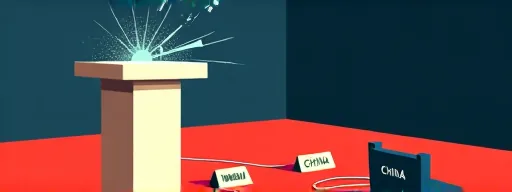
On Thursday, a coalition of 22 nations—led by the United States and including nearly all of Europe, Australia, and Canada—issued an unusually blunt joint statement demanding that Iran immediately cease “lethal plotting and other malign actions” on their soil. The statement named the Islamic Revolutionary Guard Corps’ Intelligence Organisation, the Quds Force, and Iran’s Ministry of Intelligence and Security as architects of assassination attempts, kidnappings, and intimidation campaigns against Iranian dissidents, journalists, and Jewish and Israeli communities. “Attempts to kill, kidnap, harass, intimidate, or otherwise attack people on our soil, undermines national sovereignty and international norms,” the signatories declared. “These actions must stop immediately.”
The breadth of the démarche is striking not only for its explicit denunciation of Iranian state organs but also for its spotlight on the “deplorable” use of local and international criminal gangs as proxies. Tehran, the statement alleged, has outsourced its cross-border repression to underworld networks operating in Europe, North America, and Australia—a low-cost, deniable method that has long frustrated Western security services. By collectively airing the charge, the 22 governments are signalling that the era of quiet diplomatic protests is over. The inclusion of Albania, a country that hosts a large community of Iranian political exiles, and New Zealand, geographically distant from Iran’s usual arc of operations, underscores the global reach of the alleged schemes.
Viewed from Washington, the joint statement reflects the Biden administration’s effort to build a broad coalition against Iran’s non-nuclear malign activities at a time when nuclear diplomacy remains stalled. European capitals, particularly Berlin, Paris, and London, have grown increasingly impatient with IRGC operations on the continent, following a string of foiled plots and the trials of Iranian intelligence operatives. From Tehran’s perspective, the statement amounts to a coordinated diplomatic broadside that rejects Iran’s longstanding framing of its actions as legitimate counter-terrorism. Analysts in London note that the explicit reference to “Jewish and Israeli communities and interests” directly ties these overseas operations to Iran’s wider regional posture against Israel, blurring the lines between domestic repression and geopolitical conflict.
The warning carries clear forward-looking implications. The signatories’ vow to “protect our countries and our people against these threats” suggests that if the attacks do not stop, coordinated punitive measures are likely. These could include further designations of IRGC entities, expulsions of intelligence personnel, or renewed momentum behind European efforts to proscribe the IRGC as a terrorist organisation. For now, the 22 nations have drawn a sharp red line—and placed Tehran on notice that its shadow war on foreign soil is now a collective liability.
This story appeared in
8 sources · 7 languages · 24h window