Trump Orders Hormuz Blockade as Talks Fail, Threatening Global Oil Flows and China Clash
After talks collapsed in Islamabad, the US blockade of Iranian ports began, with threats to sink any Iranian vessel approaching. The UK refuses to back the move, while China warns against interference.
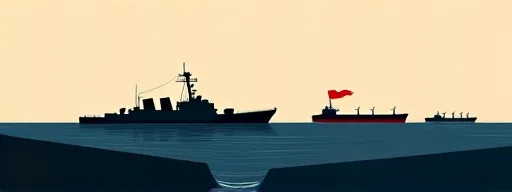
A new and perilous phase of the Iran war opened on Monday as the United States began enforcing a naval blockade of the Strait of Hormuz, targeting all vessels sailing to or from Iranian ports. The escalation followed the collapse of 21‑hour marathon negotiations in Islamabad over the weekend, during which US Vice President J.D. Vance said Tehran had not accepted Washington’s terms for ending the more than month‑old conflict. President Trump, who had earlier boasted that the US Navy was ‘sweeping the strait’, later threatened on Truth Social to ‘immediately eliminate’ any Iranian fast attack ships that approached the blockade, adding that the rest of Iran’s navy had been ‘completely obliterated’. The blockade marks a shift from six weeks of intensive US and Israeli airstrikes that failed to force Iran to capitulate, pivoting instead to economic strangulation to gain leverage for future talks.
The move instantly fractured the international community. British Prime Minister Keir Starmer refused to back the operation, announcing that the UK was ‘not supporting the blockade’ and would instead rally 40 nations to demand the strait’s reopening. Beijing issued a sharp warning, with Defence Minister Admiral Dong Jun insisting that Chinese vessels would continue to honour trade and energy agreements with Iran and that the US should not interfere. Iran’s foreign minister denounced the blockade as piracy while speaking to his Russian counterpart, and mass protests erupted in Tehran. Mediators in Pakistan, which hosted the abortive talks, scrambled to secure a second round, with US sources pointing to Thursday as a possible date. Behind the diplomacy lay a troubling legal question: as international law experts note, freedom of navigation through international straits is a core principle, and the US blockade – even if limited to Iranian ports – risks being seen as a piratical act, especially when combined with Trump’s earlier threat to interdict neutral ships that had paid Iran’s toll for safe passage.
The economic ramifications were immediate. The volume of traffic through Hormuz collapsed from the usual 100 to 120 vessels a day to just three or four by Tuesday, according to a former senior US officer, stoking fears of a global food crisis. Oil prices, which had surged more than 4% on the blockade’s onset, eased back below $100 a barrel on tentative hopes that fresh talks could avert a broader supply shock. Yet analysts warn that Iran, though weakened, retains asymmetric options: its fast attack craft, mines, and missile systems can still disrupt the US naval cordon, while its Houthi allies in Yemen could threaten the Bab al‑Mandab strait, another critical oil chokepoint. The paradox is that the longer the Hormuz bottleneck persists, the more political and economic pressure accumulates on Washington and its allies, potentially strengthening Tehran’s negotiating hand – exactly the dynamic Iran has counted on from the start.
This story appeared in
21 sources · 4 languages · 24h window