Trump summons cabinet to force Iran endgame as deal hangs on a single phrase
With peace talks stalling over nuclear wording and the Strait of Hormuz still contested, the US president faces scepticism from markets, restive Republicans and an emboldened Tehran.
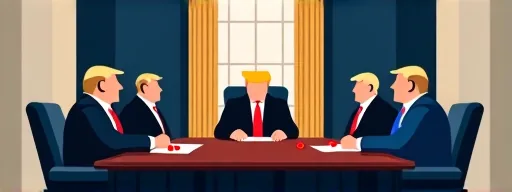
Donald Trump will convene his full cabinet at the White House on Wednesday, seeking to force a resolution to a war with Iran that his own administration now calls both largely negotiated and stubbornly unfinished. The meeting, scheduled for 11 a.m. Eastern Time, comes just days after the president claimed Washington and Tehran had “largely negotiated” a settlement, yet talks remain deadlocked over what Secretary of State Marco Rubio described as “a word, a phrase” in the nuclear provisions. That semantic impasse masks deeper fissures: Iran’s foreign ministry has accused the United States of mounting “illegal and unjust” strikes on commercial vessels, while threats from the Islamic Revolutionary Guard Corps near the Strait of Hormuz continue to restrict the flow of shipping through a waterway vital to global energy markets.
Viewed from Capitol Hill, the emerging framework is already generating ferocious headwinds. Republican senators including Ted Cruz, Lindsey Graham and Roger Wicker have condemned the terms as dangerously reminiscent of the Obama-era nuclear deal that Trump himself abandoned in his first term, arguing that it concedes too much to Tehran while leaving core nuclear capabilities intact. The domestic pressure is sharpened by the electoral calendar: midterm elections that will determine control of Congress are months away, and Pentagon officials have warned legislators that prolonged operations are imposing unsustainable financial and military strains. For a president who chose this conflict, the political imperative to exit is now as urgent as the diplomatic one.
In Gulf capitals and trading rooms, the pattern of brinkmanship has bred exhaustion rather than alarm. For weeks, Trump has pivoted between proclaiming imminent peace, threatening overwhelming force and postponing strikes, a cycle that initially sent oil and equity prices gyrating but is now met with heavy scepticism by investors. Analysts in Dubai note that the belligerent rhetoric from both sides since the conflict erupted on 28 February has followed a predictable rhythm of escalation and retreat, and markets increasingly treat each new claim of a breakthrough with the detachment reserved for a tactical pose. The result is a region suspended between ceasefire and combat, where commercial shipping remains heavily curtailed and a genuine restoration of the Strait of Hormuz as a secure passage has yet to materialise.
What is taking shape in the White House this week is a gamble that a declaration of victory can be engineered faster than the deal’s shortcomings unravel. The agreement being discussed would postpone the most intractable questions — the precise scope of Iran’s nuclear enrichment rights, the sequencing of sanctions relief, the mechanisms for verification — into future negotiating rounds. Such a construct may offer Trump a narrative of peace ahead of the midterms, but it leaves his administration acutely exposed to charges of selling a façade. Should the IRGC test the terms with fresh provocations or Tehran interpret American eagerness to disengage as permission to press its regional advantages, the path from cabinet meeting to durable settlement will prove far longer and more costly than the rhetoric now suggests.
This story appeared in
4 sources · 3 languages · 24h window