Pope Leo XIV’s Historic Congress Speech Exposes Spain’s Political Fractures and Common Ground
In a first for a pontiff, Leo XIV addressed the Spanish parliament, earning a seven-minute ovation while challenging both left and right on migration, abortion, and political polarisation.
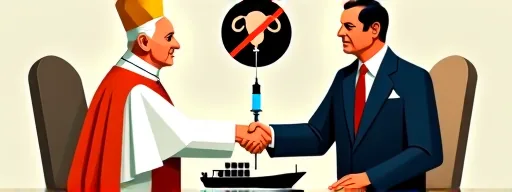
For the first time since the Spanish Cortes came into being, a Pope stood before its assembled deputies and senators on Monday, delivering a thirty-minute address that was at once a lecture on human dignity and a mirror held up to the nation’s sharpest divides. When Leo XIV finished speaking in fluent Spanish, honed during his years as a missionary in Peru, the chamber erupted into a sustained standing ovation that lasted seven minutes — an image almost surreal in a parliament where, as Italian observers noted, years of deepening acrimony have turned routine debate into a theatre of mutual disqualification.
The Pope’s intervention arrived at a moment of acute vulnerability for Prime Minister Pedro Sánchez, whose government is buffeted by corruption allegations from the opposition. From one angle, the address offered the premier a symbolic respite: Leo XIV’s emphatic call for the respectful welcome and integration of migrants, and his plea for peace, aligned comfortably with the left-wing coalition’s priorities. Yet the pontiff did not spare the government’s sensibilities, denouncing abortion and euthanasia in the same breath as he upheld the dignity of “every human life”. As Spanish newspapers pointed out, the speech thereby furnished both sides with selective affirmation while refusing to be annexed by any party; it was, one Madrid commentator wrote, a discourse that “did not fit in Congress” precisely because its frame of reference — the common good rooted in transcendent principle — operates on a different plane from daily legislative barter.
Woven through the address was a critique of political polarisation itself. Leo XIV warned that “firmness does not require contempt” and that “disagreement does not entail humiliation”, words that landed with particular force in a chamber where the far-right Vox party has made anti-migrant vitriol a staple. Yet the applause was not quite unanimous. Several lawmakers, including the Catalan republican Gabriel Rufián and the Vox deputy Carlos H. Quero, conspicuously lowered their hands early or refused to clap at all. Podemos and the Galician Nationalist Bloc boycotted the event altogether, citing the country’s constitutional secularism, while Catalan independentist groups criticised the Pope for not speaking “more Catalan” during his Barcelona leg — a grievance Spanish correspondents described as a bid to internationalise a cause that has lost momentum.
The wider context amplified the symbolism. Swiss and Italian editorialists recalled that only four previous popes have addressed national parliaments: John Paul II in Warsaw and Rome, Benedict XVI in Berlin, and now Leo XIV in Madrid. Where John Paul II’s 1999 address to the Polish Sejm carried the weight of a nation’s return to Europe, this speech unfolded in a mature democracy grappling with centrifugal forces. The Pontiff’s reference to the “grave responsibility of ordering social coexistence juridically” was, as an Argentinian wire service underscored, a direct appeal to legislators to measure their work against justice and the common good rather than short-term advantage.
Viewed from abroad, the day’s drama revealed as much about Spain as about the papacy. The spectacle of a religious leader speaking at the heart of a once fiercely anticlerical state, and being heard, marks a new chapter in the country’s complex relationship with the Church. Whether the seven-minute ovation translates into a durable recalibration of tone in Spanish politics is far from certain. For Sánchez, the fleeting alignment on peace and migration may evaporate as corruption probes deepen; for the right, the Pope’s unyielding defence of unborn life will outlast any irritation at his pro-migrant stance. In the end, Leo XIV walked out of the Cortes having given every faction something to champion and something to ignore — a reminder, perhaps, that a message too broad to fit inside a single political programme can, on occasion, still command the room.
How the same story is told elsewhere.
In a historic first, Pope Leo XIV addressed the Spanish parliament to a seven-minute standing ovation, bridging the partisan divide with a call for the common good. He aligned with Sánchez on welcoming migrants but firmly rejected abortion and euthanasia, delivering a slap to the far-right while Catalan separatists boycotted the visit for inadequate use of Catalan.
With the Sánchez government mired in scandal, the Pope's speech offered a brief respite but drew fire for its anti-abortion and anti-euthanasia stance. Progressive outlets questioned the optics of a religious leader lecturing a secular parliament on morality, some sneering at the irony of a celibate man preaching about family values.
From Argentina to the rest of Latin America, the Pope's speech was embraced as symbolic payback for colonial wounds, after he explicitly condemned the conquest of the Americas. The pontiff brought the global South's voice to Europe, championing human dignity, social justice, and the common good, sparking pride in a Latin American pope.
The papal visit was framed as a diplomatic milestone, stressing the universal values of dignity and the common good. State media steered clear of divisive topics like abortion and polarization, sticking to a factual account of the historic speech and the warm reception.
This story appeared in
8 sources · 3 languages · 24h window