On Tiananmen Anniversary, Taiwan and US Urge Beijing to Confront Past
President Lai Ching-te and Secretary of State Marco Rubio issue parallel calls for Beijing to acknowledge the 1989 crackdown, as overseas commemorations highlight the enduring official silence in China.
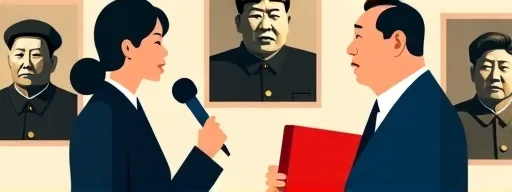
Marking the 37th anniversary of the crackdown on pro-democracy protesters in and around Beijing’s Tiananmen Square, senior figures in Taiwan and the United States issued parallel calls for China to confront a past it has long sought to bury. The statements, released on 4 June, reflect a coordinated push from democratic allies to break the official silence that still surrounds an event the Chinese Communist Party (CCP) treats as a taboo.
In Taipei, President Lai Ching-te used a Facebook post to urge Beijing to “face up to the June 4 incident of 37 years ago, acknowledge the truth, soothe the pain, and open the door to reconciliation and dialogue.” He recalled that thousands of young Chinese were “gunned down and crushed by troops and tanks on the streets of Beijing, in Tiananmen Square, and across China” on that day in 1989. Lai added that a truly great nation should “embrace diverse voices, protect the people’s right to pursue their dreams, and have the courage to confront the wounds of its history.” Taiwan’s government has long hosted commemorations in the capital, with the anniversary marked in Taipei even as public discussion in mainland China remains suppressed.
Viewed from Washington, Secretary of State Marco Rubio issued a similarly forceful statement, declaring that “no censorship, however massive, can ever erase the past.” Rubio said the world remembers the thousands of peaceful protesters, including students, workers, and other civilians, who were attacked on the orders of the CCP as they exercised their “inalienable rights to freedom of expression and peaceful assembly.” He forecast that “those who sacrificed to defend these rights will one day obtain justice,” and that their legacy would be honoured.
The chorus of international pressure, however, is unlikely to move Beijing, which has systematically erased public memory of the crackdown. For decades, any mention of 4 June 1989 has been scrubbed from domestic media and online discourse, with the date entering China’s political lexicon only as a cipher. Analysts note that Xi Jinping’s government, which has prioritised ideological control, sees any concession on historical accountability as a threat to the party’s legitimacy. The anniversary continues to reveal the chasm between China’s narrative of national rejuvenation and the demands of its critics for truth and justice. As long as the CCP holds power, the “June Four” wound is likely to remain unhealed—periodically reopened by commemorations in Taipei, Washington, and other capitals, but met with silence from Beijing.
How the same story is told elsewhere.
Taiwan calls on Beijing to acknowledge the Tiananmen crackdown 37 years ago, urging truth, reconciliation, and dialogue. Japanese outlets observe that China’s younger generations remain unaware of the event, as official censorship erases the memory.
Marking the 37th anniversary, US Secretary of State Marco Rubio states that no censorship can erase the past and that those who sacrificed their lives for freedom of speech and peaceful assembly will one day see justice. Continental European outlets relay the message, highlighting universal rights.
Persian-language outlets within the Atlantic bloc frame the anniversary as the commemoration of a brutal massacre in which thousands of peaceful protesters were struck down on orders of the Chinese Communist Party. Marco Rubio’s statement is embraced as a warning that the martyrs’ sacrifice for freedom will not be forgotten and justice will ultimately triumph.
This story appeared in
7 sources · 5 languages · 24h window