Nvidia Challenges Intel with AI-First 'Superchip' for Windows Laptops
CEO Jensen Huang reveals RTX Spark, a processor built for AI agents, challenging Intel and AMD in the Windows laptop market.
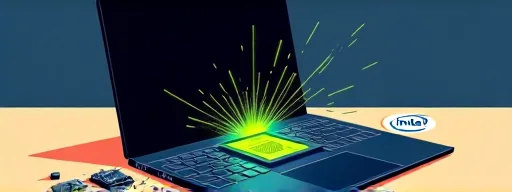
At the Computex trade show in Taipei, Nvidia CEO Jensen Huang announced a bold entry into the personal computer processor market with the RTX Spark, a “superchip” designed to bring advanced artificial intelligence directly to Windows laptops and desktops. Flanked by prototypes from Dell and Lenovo, Huang declared that “Microsoft and Nvidia are going to reinvent the PC,” framing the device as a colleague rather than a mere tool. The chip, developed in partnership with Taiwan’s MediaTek, integrates a central processing unit (CPU) based on the Arm architecture with a Blackwell graphics processing unit (GPU), promising to run large AI models locally without constant cloud dependence. The first machines are expected to ship in the autumn, from brands including HP, Asus, Acer and MSI, as well as Microsoft’s own Surface line.
The RTX Spark represents Nvidia’s most aggressive move yet against the entrenched x86 duopoly of Intel and AMD. By adopting Arm-based designs—much like Apple’s M-series chips—Nvidia aims to offer superior energy efficiency and dedicated AI acceleration. The top-tier variant boasts 20 CPU cores, 6,144 GPU cores and up to 128 gigabytes of unified memory, specifications that dwarf many existing laptop processors. Yet the shift to Arm means legacy Windows applications will require emulation, a hurdle that has hampered previous efforts by Qualcomm. Nvidia executives, however, expressed confidence that system-level optimisations with Microsoft will deliver seamless performance, including for gaming, with Huang briefly demonstrating Forza Horizon 6 and a James Bond title on stage.
Viewed from Taiwan, the launch underscores the island’s central role in the global AI supply chain. James Huang, chairman of the Taiwan External Trade Development Council, stressed that Taipei has become “the point where the next decades of AI development are being defined.” Nvidia’s decision to stage the unveiling at Computex—Asia’s largest tech fair, which this year attracted a record 30,000 buyers—reflects the region’s weight in semiconductor manufacturing and design. Meanwhile, analysts in London note that Nvidia is leveraging its dominance in data-centre AI chips to muscle into a PC market that Intel and AMD have long controlled.
The move is not without risk. La Repubblica observed that the chip’s advanced capabilities are likely to command a premium price, potentially confining early adopters to high-end professional and gaming segments. Moreover, Intel and AMD are not standing still; both are accelerating their own AI-integrated processor roadmaps. Still, with a market capitalisation exceeding five trillion dollars, Nvidia possesses formidable resources to sustain a prolonged contest. The bet, as Huang himself framed it, is that the shift to AI-powered personal computing will be as consequential as the leap from feature phones to smartphones—a transformation that could redraw the industry’s map.
How the same story is told elsewhere.
Nvidia is entering the Windows notebook market with its new RTX Spark chip, aiming to weaken Intel's dominance. The first devices from Dell and Lenovo will arrive in autumn 2026, powered by a processor co-developed with MediaTek.
As Nvidia unveils the RTX Spark chip to reinvent the PC with Microsoft, a subsidiary will also supply GPUs for Mexico's Coatlicue supercomputer. A new era is emerging where AI infrastructure becomes a strategic pillar, on a par with transport and telecom networks.
Nvidia's push into AI PCs raises questions about risks for users: from security vulnerabilities to lock-in with proprietary architectures. As manufacturers tout faster processing, doubts linger about whether consumers are prepared for the downsides.
Jensen Huang electrified Computex with the RTX Spark launch and the promise to reinvent the PC with Microsoft. Amid dancing robots and adoring crowds, the message was clear: compute is profit, and Nvidia leads the new computing era.
This story appeared in
24 sources · 2 languages · 24h window