Iran Vows No Retreat After Strikes, Insists Diplomacy Still on Table
President Pezeshkian says Tehran will not back down under threat but has kept open the door to negotiations, as a weekend of cross-border strikes tests the region's fragile truce.
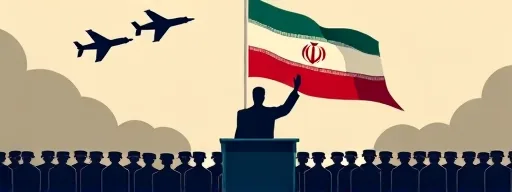
Iran’s president declared on Monday that his country would not retreat in the face of threats, even as he insisted Tehran had not abandoned peace negotiations, after a fresh exchange of missile strikes with Israel shattered the relative calm that had held since an April ceasefire. In a post on X intended to project both resolve and diplomatic flexibility, Masoud Pezeshkian wrote that “diplomacy and defense are the two wings of national power” and that Iran had “neither left the field nor the negotiating table”. The remarks came hours after Iranian forces announced they had halted their own retaliatory attacks.
Over the weekend, Israel and Iran traded fire for the first time since the April truce. The immediate flashpoint was an Israeli strike on the outskirts of Beirut that targeted facilities of the Iran-backed Hezbollah movement, after which Iranian forces launched missiles at Israel before declaring a halt to the operation. The exchange prompted Washington to call for restraint, with President Donald Trump pushing for an immediate halt to hostilities. Viewed from Tehran, the strikes underscored how easily the fragile ceasefire could unravel, even as authorities sought to shape the aftermath with a message of controlled force.
Pezeshkian explicitly placed the dual approach within the frame of peace negotiations with the United States, emphasising that Iran’s priority remained the security and peace of its people and that the country would not retreat under any threat. The language carefully balanced military readiness — the Armed Forces would defend the nation’s rights with “utmost strength” — with an open door to dialogue. Analysts in London noted that this simultaneous insistence on defense and diplomacy is a strategic constant in Iranian statecraft, designed to project resolve to domestic audiences while preserving a pathway for sanctions relief and regional de-escalation.
The president said the test would be passed “with unity and rationality”. Yet the cycle of strikes exposes the fragility of any arrangement that relies on mutual restraint. From Beirut to Washington, the next moves will be scrutinised. If the April ceasefire fails to hold, the risk of a wider conflagration that draws in Hezbollah, Israel and their respective allies grows significantly, leaving little room for the negotiating table that Tehran says it has not left.
This story appeared in
6 sources · 4 languages · 24h window