Gaza’s Children Confront Swarms of Unfamiliar Rats as a Bitter Eid Underlines the Truce’s Frailty
Seven months into the US-brokered ceasefire, most of Gaza’s 700,000 children remain out of school and a new rat infestation is spreading, while the holiday of Eid al-Adha offers only hunger and despair.
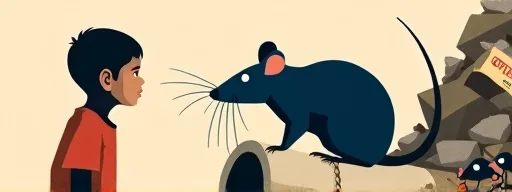
Seven months after the guns largely fell silent across the Gaza Strip, the truce has yielded a peace devoid of normalcy, where children now battle unfamiliar species of rats that overrun the tent camps and shattered buildings they cannot escape. Salim Oweis, a UNICEF official dispatched to Khan Yunis to assess conditions for the territory’s young, describes a dystopian encroachment. “Before, children might see an occasional rat,” he says, speaking from the ruins. “But now new varieties are appearing. Nothing can stop them.” The infestation is one measure of how the ceasefire has suspended active combat without restoring a liveable environment; most families remain exiled from their homes, which are either pulverised or trapped inside Israeli-controlled buffer zones that remain off-limits.
Schooling has become another casualty. UNICEF’s own tallies reveal a stark, perhaps chaotic, picture. Swedish daily Aftonbladet reports that the agency has managed to organise some form of education for 260,000 of Gaza’s 700,000 children, yet other outlets, including Sydsvenskan, cite a figure of merely 135,000. Even the higher estimate means well over half the Strip’s young are entirely without classrooms, their futures suspended amid the rubble. The discrepancy itself signals how profoundly institutions are struggling to function, let alone deliver reliable data.
The arrival of Eid al-Adha has only magnified the deprivation. Gazans accustomed to new clothes, festive biscuits and sacrificial sheep have found every hallmark of the holiday either unaffordable or physically absent. With livestock imports blocked, just 15,000 sheep remain for 2.1 million people, according to UN figures cited by Khaleej Times. Nadia Abu Shamala, a 40-year-old displaced from Gaza’s north to Deir al-Balah, told AFP that she goes to the market “only to look around”. Her voice carries the exhaustion of over two years uprooted: “Whenever I ask about prices, I return heartbroken. This year, Eid comes with none of the joy we once knew.”
Viewed from Washington, the October 2025 ceasefire was a hard-won diplomatic prize, a pact that stopped the worst bloodshed and promised a pathway for aid. Yet from the alleys of central Gaza, the deal appears to have frozen the conflict while leaving the essential machinery of siege intact. Analysts in London note that humanitarian access has improved without reversing the collapse of water, sanitation and waste systems — the very conditions that breed the new rat colonies and the diseases they carry. The aid convoys that do arrive are swallowed by a void of destroyed infrastructure.
The forward horizon offers little comfort. Unless the truce is transformed into a political settlement that lifts the de facto blockade and allows reconstruction, the festering miseries — from rodent-borne illness to an entire generation deprived of learning — will harden into permanent obstacles to any durable peace. For Gaza’s children, the ceasefire has merely changed the shape of their suffering.
This story appeared in
14 sources · 1 languages · 24h window