Europe Petrol Prices Dip as Asia Holds Steady Amid Global Crude Volatility
Petrol and diesel costs fell in Italy and Spain, while India and Taiwan kept rates flat. Argentina’s sprawling price gaps endured, and crude oil’s war premium persisted.
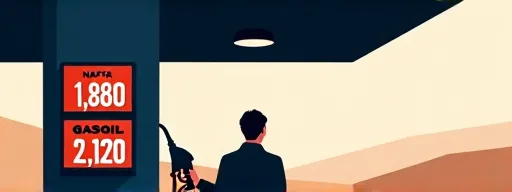
Italian government data released on Saturday showed that average self-service petrol prices slipped to €1.921 a litre, with diesel at €1.980 — both remaining below the psychologically important €2 mark. Even on the more expensive motorway network, prices averaged €2.020 and €2.072 respectively [A1]. In Spain, the decline was similarly mild but measurable: the benchmark 95-octane unleaded stood at €1.52, while diesel fetched €1.60, representing week-on-week drops of 0.95 per cent and 1.16 per cent [A12].
The picture on the other side of Eurasia could hardly have been more different. India’s state-controlled oil marketing companies kept pump prices unchanged for a second successive day, following a cumulative increase of nearly ₹7.50 per litre since mid‑May that took rates to their highest since 2022 [A23]. Taiwan’s CPC Corp. announced it would freeze petrol and diesel tags for the coming week through 14 June, absorbing what it said would be losses of NT$1.0 and NT$2.4 per litre respectively, in order to shield consumers from elevated international crude prices [A25].
Argentina’s fuel landscape offered the starkest illustration of localised price volatility. The national energy secretariat published reference prices for dozens of provinces, revealing spreads of more than 100 per cent within a single province. In Entre Ríos, a litre of regular petrol cost as little as 1,266 Argentine pesos at YPF stations, while PUMA outlets charged 2,176 pesos [A6]. In La Pampa, the range was narrower, with YPF’s common petrol at 1,138 pesos and PUMA at 1,109 pesos [A2]. Such discrepancies, replicated in varying degrees nationwide, underscore a market distorted by import controls, exchange rate pressures and uneven competition.
Underpinning these trends, global crude oil markets remained firm. Mexico’s export benchmark blend settled at $88.3 a barrel on Friday, keeping refining costs elevated [A21]. In Puebla, Mexico's daily monitored pump prices showed regular petrol at 23.746 pesos, premium at 28.102 and diesel at 27.168, largely steady [A18].
The mosaic of fuel pricing thus reflects divergent policy choices: European governments are allowing market forces to bring down costs as refineries ramp up seasonal output, while Asian state-owned entities are prioritising stability over profitability. Argentina’s chaotic spreads, conversely, are less a deliberate strategy than an outcome of chronic economic imbalances. For consumers everywhere, the current respite may prove fleeting if turmoil in the Middle East intensifies, keeping the war premium embedded in every barrel of crude.
How the same story is told elsewhere.
Finally good news for motorists: petrol prices at self-service pumps have fallen below the symbolic 2-euro mark across the national network. The Ministry of Economic Development reports encouraging data, a continued drop that offers some relief to households.
Fuel prices across Argentina differ from province to province, driven by international crude costs, dollar swings, and domestic taxes. The outlook is one of instability, with the government publishing reference values by region, leaving consumers uncertain about the next adjustment.
Petrol and diesel prices in India held steady on June 6, extending the pause after a late-May hike. They remain at their highest since 2022, following a cumulative increase of nearly 7.50 rupees per litre in a few weeks.
This story appeared in
7 sources · 1 languages · 24h window