EU Seeks Digital Sovereignty as Trade Tensions with U.S. and China Mount
Brussels is set to unveil a plan to reduce its reliance on American and Asian technology, driven by transatlantic friction and trade war fears with Beijing.
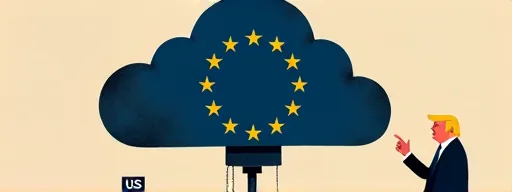
The European Union will this week outline a comprehensive strategy to slash its technological dependence on the United States and Asia, aiming for what officials call “technological sovereignty.” The initiative, teased by EU tech chief Henna Virkkunen, seeks to build European digital ecosystems that retain control over critical services and data, and resist foreign interference. Viewed from Brussels, the move marks a decisive pivot away from a decades-old comfort with outsourcing strategic infrastructure to Silicon Valley and Chinese manufacturers.
The plan emerges against a backdrop of escalating transatlantic anxiety. In European capitals, repeated threats from former President Donald Trump — to annex Greenland, abandon NATO, or impose sweeping tariffs on EU goods — have shattered the post-1945 security consensus. “We live in a world where this type of very strong dependency can be used as a weapon against us,” Virkkunen has cautioned, reflecting a new, wary mood in Berlin and Stockholm. Simultaneously, EU officials are bracing for a potential trade war with China; the European Commission has held closed-door talks on countering what it sees as unsustainable economic imbalances with Beijing. The bloc fears becoming trapped between an assertive Washington and a rising Beijing unless it can rapidly rebuild its industrial competitiveness and defence base.
Within the EU, a parallel push for “sovereign AI” has gained momentum. European companies, spooked by the prospect of having their artificial-intelligence services cut off or subjected to price shocks in the event of a trade conflict, are increasingly demanding locally hosted infrastructure. Stricter enforcement of privacy rules also discourages sending sensitive data to overseas cloud giants. Industry estimates suggest that 70 to 80 per cent of Europe’s digital infrastructure remains in non-EU hands — a vulnerability that policymakers in Paris and Helsinki now label a strategic risk.
Looking ahead, the EU’s assertiveness risks inflaming relations with Washington, which has already pushed back hard against European fines and regulation targeting American tech firms. Analysts in London note that the quest for autonomy could fracture the transatlantic alliance at a moment when unity is needed to counter Chinese influence. Yet the combination of geopolitical shocks and commercial pressures appears to have galvanised a broad consensus: Europe cannot afford to outsource its digital backbone. Whether the bloc can translate this ambition into competitive homegrown alternatives remains an open question, but the trajectory toward a more self-reliant, geopolitically hardened Europe appears irreversible.
How the same story is told elsewhere.
Spurred by Trump’s threats over Greenland, tariffs and NATO, the EU is rolling out a tech package to cut digital dependence on the US, especially in cloud services and chips. Brussels claims strategic autonomy but stops short of a clean break with Washington. European businesses and governments now see over‑reliance on American providers as a source of vulnerability.
The EU is set to unveil a blueprint to sharply cut reliance on American and Asian technology, favouring home‑grown digital ecosystems. The push for ‘technological sovereignty’ may further strain relations with the US, which has already bristled at European fines and rules against American tech giants.
The European Union is gearing up for a trade war with BRICS member China, according to reports. In a closed‑door meeting the European Commission deemed economic relations with Beijing unsustainable and pledged a tougher, more coordinated response. EU leaders are largely united in believing that without countermeasures the bloc will find itself at a disadvantage.
This story appeared in
11 sources · 1 languages · 24h window