Global EV Sales Surge as Oil Price Shock Accelerates Shift to Chinese-Made Models
Record electric vehicle sales across Europe, Asia and the Americas are fuelled by Middle East tensions, with Chinese manufacturers capitalising on the momentum despite rising trade barriers.
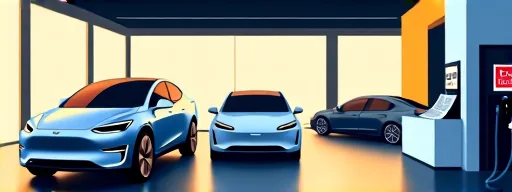
The geopolitical tremors from the Iran conflict are reshaping the global auto market at unprecedented speed. In May, electric vehicles accounted for 26% of new car sales in Switzerland, a market once synonymous with petrol precision, as fuel price shocks turned consumers towards battery power [A1]. India, too, hit a new peak of 26,221 EV units sold, an 80% year-on-year leap [A13]. Across 37 countries—from Australia to the United Kingdom—monthly EV sales records tumbled in March and April, data from S&P Global shows, as the energy crisis made electric models financially irresistible [A2]. The shift is structural: insurance quotes for EVs doubled in Australia this year, while sales of diesel utes plummeted [A9]. Viewed from New Delhi or Zurich, the driver is the same: petrol price volatility linked directly to the Gulf crisis [A1][A13].
Chinese automakers are the clearest beneficiaries. BYD, the world’s largest EV seller, has quietly seized 2.2% of total car registrations in the European Union, Britain and EFTA countries [A5], and in Switzerland it overtook Tesla with 1,929 cars sold in the first five months of 2026 [A1]. The expansion is not confined to exports. SAIC, parent of MG, confirmed a €200 million factory in Galicia, Spain—its first European production base—joining Chery’s earlier deal to revive Nissan’s old Barcelona plant [A3][A12]. The investment wave has turned Spain into a prime destination for Chinese auto capital, drawn by its fast-growing economy and renewable energy focus [A12]. Yet the incursion is stoking friction. EU tariffs on Chinese-made EVs, designed to shield local manufacturers, have become a flashpoint in Brussels-Beijing trade talks [A5]. Meanwhile, in Canada, over 2,900 Chinese-made EVs arrived in May after Prime Minister Mark Carney cut import duties, even as security agencies warned of data privacy risks [A6].
For traditional carmakers, the landscape is increasingly precarious. Tesla’s Model Y remained the world’s best-selling electric car, but the brand lost 24% of its SUV sales in Switzerland and faced fierce price competition from Chinese rivals [A4][A8]. In Italy, overall car sales rose 7.6% in May, but the real story was the soaring popularity of BYD and MG, while Fiat held on to its top spot largely on the strength of legacy models [A10]. The SUV boom, now 58% of new registrations in Switzerland, is itself electrifying: roughly one in four new SUVs there is fully electric [A11], a trend that puts massive batteries in large vehicles—a paradoxical result of fossil fuel anxiety.
Analysts point to a fundamental rebalancing. The EV transition, for years propped up by government subsidies and mandates, is now being pulled by consumer demand in ways that regulation never achieved [A2]. This market-led shift, however, is uneven. While Europe and parts of Asia surge, the global clean energy transition still shows stark divides; nations like Russia, France and India lag in the share of electricity from clean sources, even as the UK and Japan post strong gains [A7]. The Iran-fuelled oil spike may prove a temporary accelerant, but its legacy will be a car market indelibly globalised, with Chinese manufacturers embedded on European factory floors and a growing number of drivers worldwide who have switched to electric—and will not return.
How the same story is told elsewhere.
Chinese-made electric vehicles are entering Western markets, with Canadian authorities warning citizens about security risks, while Australia sees a structural shift as BYD ships arrive and traditional diesel utilities decline.
The Iran conflict is driving up petrol prices, triggering an electric vehicle boom in Switzerland with the ironic twist that Donald Trump's oil policies inadvertently help battery cars. Spain is emerging as the leading host for Chinese factory investments, while Italian sales of BYD and MG surge, even as SUV dominance draws critical commentary.
Chinese automakers are speeding up their European expansion on the back of the EV transition, even as this stokes trade tensions with Brussels, which has imposed tariffs to shield European producers.
India’s electric vehicle market hits a new record as relentless fuel price hikes push sales up 80 per cent year-on-year to 26,221 units in May. Tata leads the pack, and lower running costs are strengthening domestic demand.
This story appeared in
12 sources · 3 languages · 24h window